RFP template: Choosing AI technology for enterprise customer service
An Excel sheet containing 100+ detailed evaluation questions across seven categories in scoring-ready format you can send directly to vendors.
Learn More

Ecommerce customer service isn’t under pressure because teams are doing something wrong. Demand scales faster than systems, and the same workflows repeat thousands of times a day.
Order tracking spikes during peak season. Returns surge after holiday promotions. Inventory questions stall purchases. Post-purchase changes introduce fulfillment risk.
For CX leaders, the challenge isn’t answering these questions. It’s resolving them accurately, consistently, and at scale without adding cost or complexity.
This post is part of our AI agent in the field series: a look at how real AI agents support real customer service teams in production today. In this edition, we’re focusing on five ecommerce customer service use cases teams are automating with AI agents to reduce service load and improve customer experience.
These aren’t experiments or proofs of concept. They’re production-ready ecommerce workflows already live, already delivering results, and already changing how customers experience support.
In ecommerce , the highest-volume conversations are rarely complex, but they are operationally demanding.
CX teams field the same questions day after day, across channels, time zones, and peak periods. The cost isn’t just in agent hours. It’s in delayed resolutions, repeat contacts, fulfillment errors, and customer trust that erodes quietly over time.
That’s why the most valuable AI use cases for ecommerce customer service aren’t about novelty. They’re about focus.
The workflows worth automating first share a few defining traits:
When AI agents are trained to follow structured Playbooks , these workflows become safe to automate. The AI agent knows what to check, how to respond, and when to escalate, delivering consistent outcomes without adding risk.
Below are five ecommerce customer service workflows that teams are automating today to reduce service load while improving customer experience.
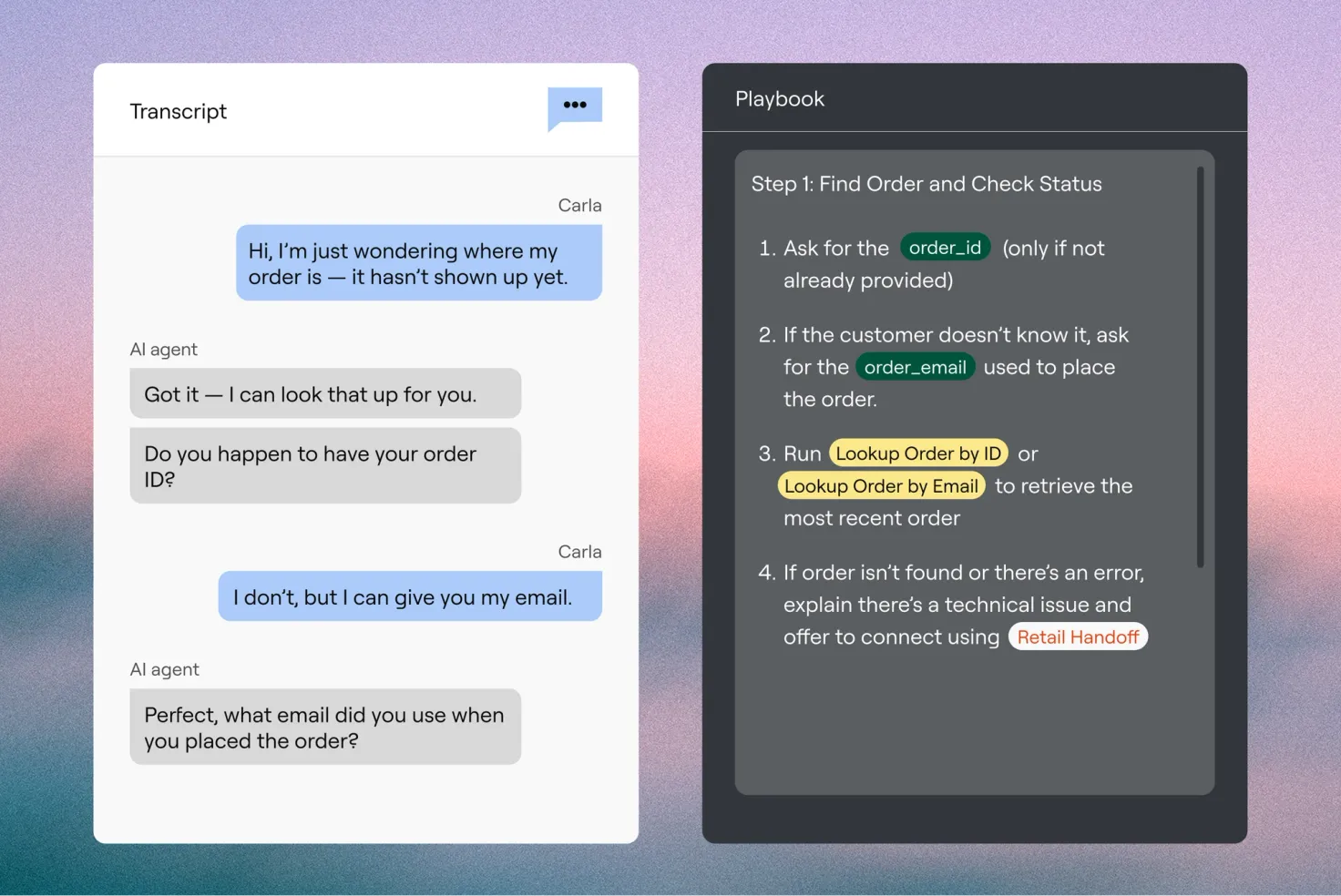
Order tracking is one of the most common and repetitive ecommerce customer service workflows.
Customers may start these conversations with simple questions like, “Where is my order?”, but for CX teams, the complexity lives behind the scenes. Accurate answers require pulling information from order management systems, fulfillment partners, and carriers, often across multiple shipments or delivery windows.
Handled manually, these interactions drive repeat contacts and pull agents away from more complex work.
With an AI agent utilizing an order tracking Playbook, ecommerce teams can automate this workflow end-to-end.
AI agents can:
Because the agent follows a defined procedure, responses stay accurate and consistent, regardless of channel or volume. Customers get clarity faster, and CX teams see a meaningful drop in “Where’s my order?” tickets, especially during peak seasons.
This is often the first ecommerce workflow teams automate with AI, and one of the fastest ways to reduce inbound volume without compromising experience.
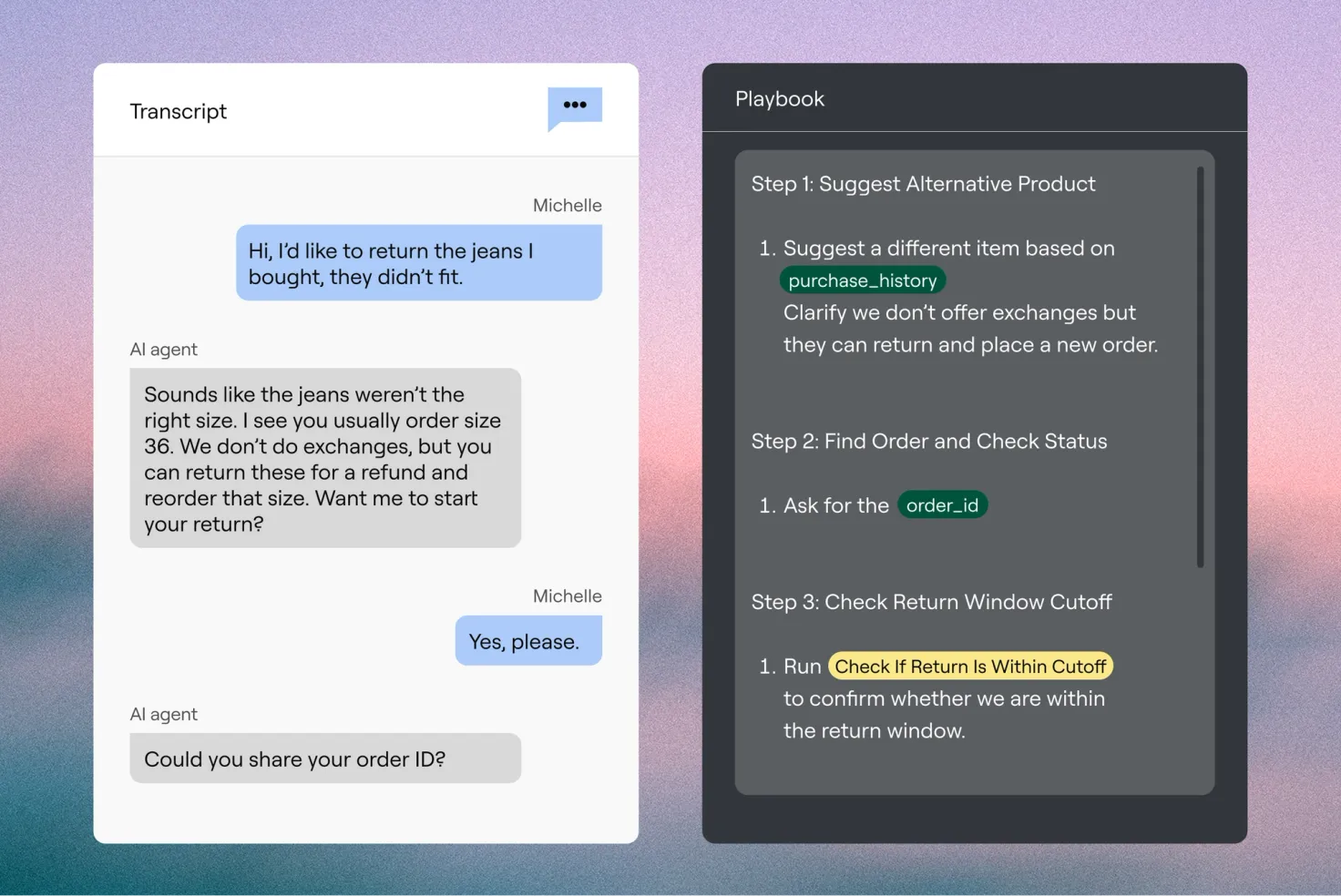
Returns and refunds are a post-purchase pressure point for ecommerce teams and customers alike. Customers want quick, clear answers about eligibility and timing. When CX teams are tied up handling returns, it creates a tradeoff—pulling time and attention away from revenue-generating interactions and creating bottlenecks across the business.
When handled without automation, returns quickly become one of the most time-consuming support queues, especially after promotions or seasonal spikes.
With a structured returns Playbook in place, AI agents can manage these workflows with confidence.
AI agents can:
Because the AI agent follows policy step by step, every customer gets the same clear, accurate experience, without requiring agent intervention for routine cases. More complex exceptions are escalated automatically, ensuring edge cases still get the attention they need.
The result is faster resolutions, fewer follow-ups, and a return experience that feels predictable instead of painful.
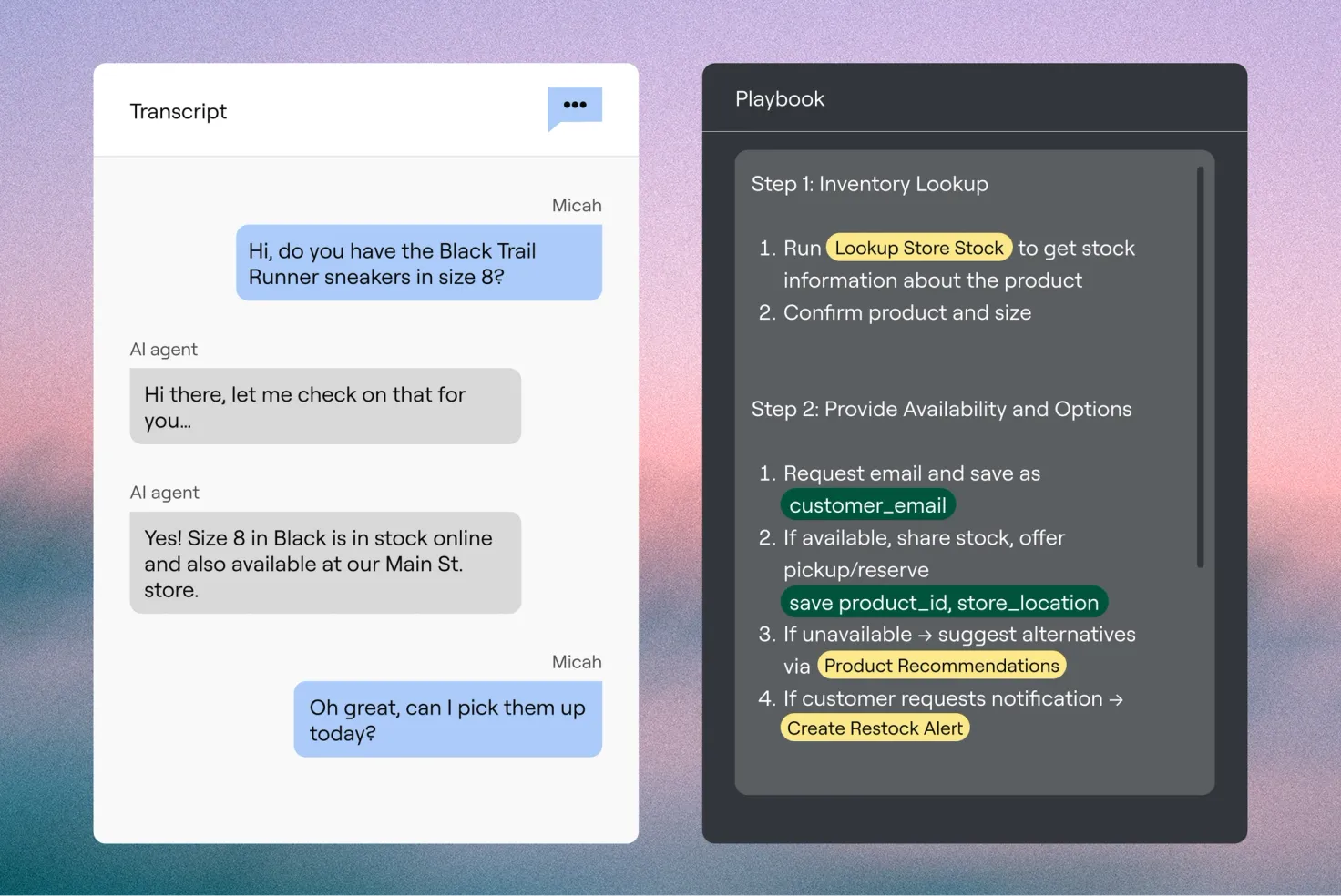
Inventory questions often decide whether a customer buys or walks away.
When customers ask things like “Is this item in stock?” or “Can I pick this up today?”, they’re not browsing. They’re ready to act. Delays or uncertainty at this moment cost revenue, not just time.
For CX teams, these questions are difficult to answer quickly without access to real-time inventory systems across online and in-store locations. Playbooks help bridge that gap.
With an inventory Playbook in place, AI agents can:
Because the AI agent follows a defined process, responses stay accurate, even during traffic spikes. Customers get immediate clarity, and CX teams reduce pre-purchase friction without adding manual work.
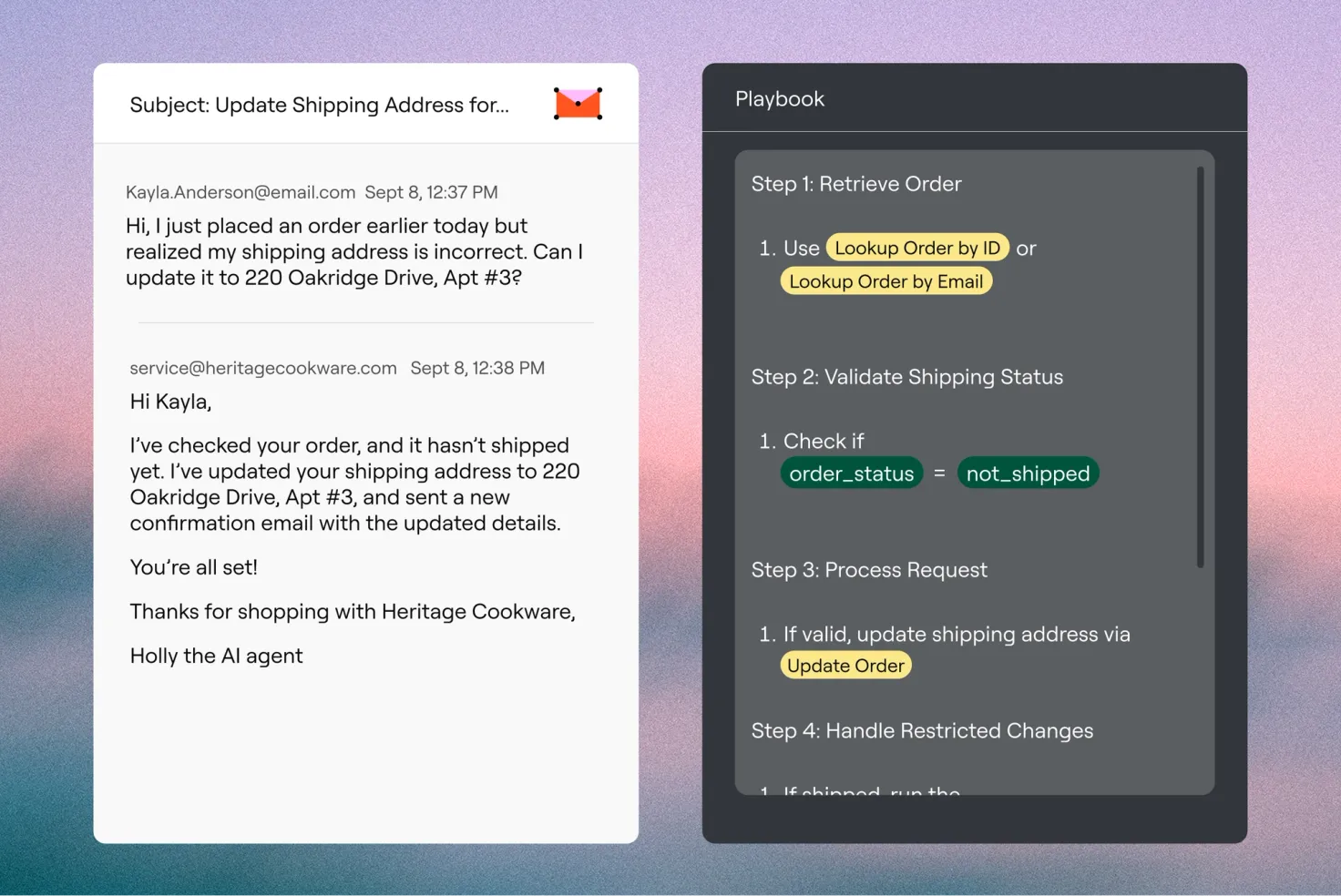
Post-purchase flexibility, in the form of order modification and cancellation , is now table stakes in ecommerce, but it’s also one of the easiest places for errors to creep in.
Customers regularly request changes after checkout: updating a shipping address, adjusting quantities, or canceling an order before it ships. Each request requires eligibility checks and coordination with fulfillment systems.
Handled manually, these workflows slow teams down and introduce risk. With an order modification Playbook, AI agents can automate these interactions safely.
AI agents can:
This gives customers more control while protecting fulfillment accuracy. For CX teams, it means fewer back-and-forth messages and fewer downstream errors.
Promotions and loyalty programs are meant to build momentum. In practice, they often generate confusion—and support tickets.
Customers ask why a promo code didn’t apply, whether they’re eligible for a discount, or how many loyalty points they have. These conversations are frequent, repetitive, and easy to mishandle without clear rules.
AI agents trained on promotions and loyalty Playbooks bring structure to these workflows. They can:
By resolving these questions instantly and consistently, AI agents turn a common source of frustration into a moment that reinforces value and trust.
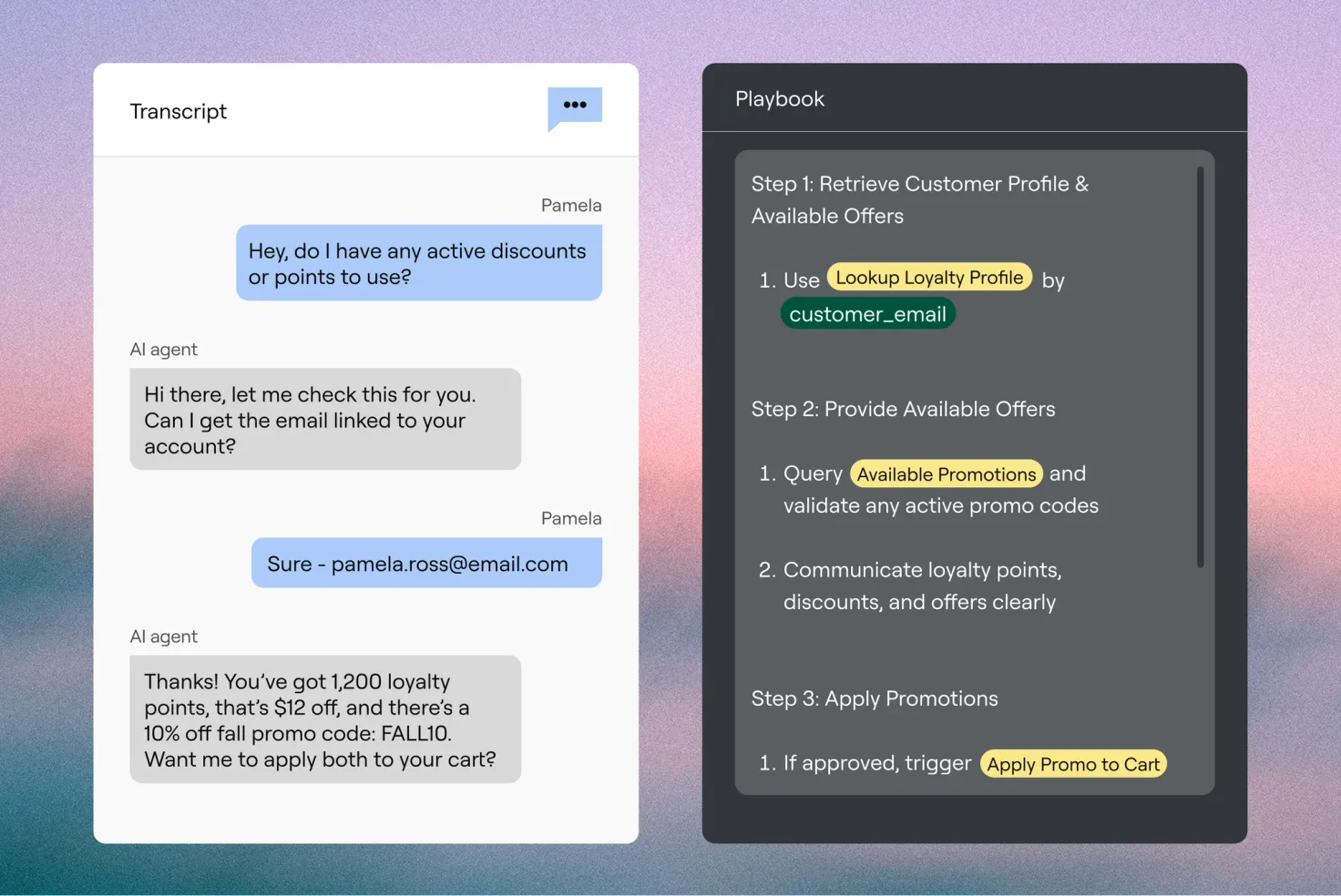
Successful conversational AI for ecommerce doesn’t deflect customers or oversimplify real problems. It focuses on resolving the workflows that matter most and doing so reliably.
Across these ecommerce use cases, effective AI agents:
That’s the difference between surface-level automation and AI that actually supports CX teams at scale.
Knowing which ecommerce workflows to automate is only the first step. Knowing how to automate them well is what separates early experiments from lasting impact.
Ada’s Ecommerce Playbooks give teams a clear starting point. Each Playbook outlines how an AI agent should handle a specific workflow, from interpreting intent, to checking systems, to resolving the interaction or escalating when needed.
These Playbooks aren’t theoretical. They’re built from real ecommerce deployments and designed to help teams move faster without sacrificing control or trust.
If you’re looking to reduce service load, improve resolution quality, and scale ecommerce customer service with confidence, the Playbooks Library shows what good looks like.
Browse real examples of AI agents using plain-language instructions to automate multi-step processes with speed and precision.
Explore Playbooks Library