RFP template: Choosing AI technology for enterprise customer service
An Excel sheet containing 100+ detailed evaluation questions across seven categories in scoring-ready format you can send directly to vendors.
Learn More

In 2025, the value of AI in customer experience was proven. Now, the stakes are higher.
The earliest era of AI adoption is over. AI agents have moved beyond pilots and point solutions. They’re becoming core infrastructure in how enterprises serve, support, and scale customer interactions.
Today, it’s no longer about whether AI can handle support volume, automate resolutions, or deliver fast ROI. That’s table stakes.
In 2026, the question is whether organizations can operationalize AI: reliably, responsibly, and with results that actually move the needle. This next chapter won’t be defined by who has the best model. It will be defined by who builds the best system.
Making AI part of the plumbing—not just the polish—means rethinking infrastructure, operations, measurement, and team design from the ground up. And that’s where most teams will struggle.
At Ada, we’ve partnered with enterprises that are already leading this shift . We’ve seen the metrics change, the roles evolve, and the expectations rise. From that front-row seat, here’s what we believe AI in customer experience will look like in 2026, and what it will take to lead.
Here are our top AI predictions for 2026.
In 2025, AI agents moved out of the lab and into production. Enterprises proved that generative AI could automate support conversations, improve customer satisfaction, and reduce cost-to-serve.
And not just on edge cases. AI agents are resolving millions of conversations, becoming the first point of contact across digital channels, and absorbing high-volume, high-stakes interactions that used to go straight to human reps.
This shift changes everything, from how AI is deployed to how it’s governed.
In 2026, AI agents will stop sitting adjacent to the business. They’ll become the business. Not a bolt-on, not a chatbot, but core infrastructure. That shift requires a fundamental mindset change. It’s no longer about which workflows AI can support. It’s about which systems you can rebuild around it.
“2026 becomes the shift from validation to redesign. The proof points are already on the table. Executives have seen AI deliver material ROI in contained domains, and the fear narrative has collapsed under real results. The question changes. Instead of “does this work?” leadership teams will start asking “what do we rebuild around this?”


AI is no longer a layer on top of legacy processes. It’s the new substrate. And that demands real transformation—in team structure , tech stack, and customer strategy.
More companies are waking up to this shift, but most aren’t ready for it. 88% of organizations report using AI this year , but only about 7% have fully scaled it across their organization.
That’s not a technology gap, it’s an operating gap. And it’s where the winners in 2026 will separate from the rest.
In the early days of AI customer service , success was measured in deflection. If the agent could intercept a ticket before it hit a human, that was considered a win.
Not anymore.
In 2026, containment is no longer the metric that matters . Enterprises will expect AI agents to deliver measurable business outcomes, not just lower volumes. That means solving problems completely, owning full resolution, and contributing directly to loyalty, retention, and revenue.
AI agents will be judged the same way top-performing human reps are: on how well they resolve complex issues, recover at-risk customers, and move conversations toward long-term value.
The best teams will track metrics that reflect this shift :
The next wave of AI will be measured not just by speed, but by how AI can improve customer experience outcomes like retention and loyalty.
“There’s still a lingering belief that these agents are primarily about deflection. They’re not. The real value is in deep resolution: how often the agent actually solves the root issue for the customer. 2026 will be defined not just by resolution rates, but by the depth of resolution enterprises can consistently achieve.”

We’ve already seen this shift in action. AI agents are surfacing renewal offers, triggering proactive outreach, and turning service moments into conversion opportunities. These aren’t edge cases anymore, they’re becoming the benchmark.
This is also the moment where AI in customer experience shifts from a cost center to a growth engine. AI agents are increasingly accountable for expanding relationships; not just triaging requests.
Enterprises will measure their AI programs not by what they save, but by what they generate.
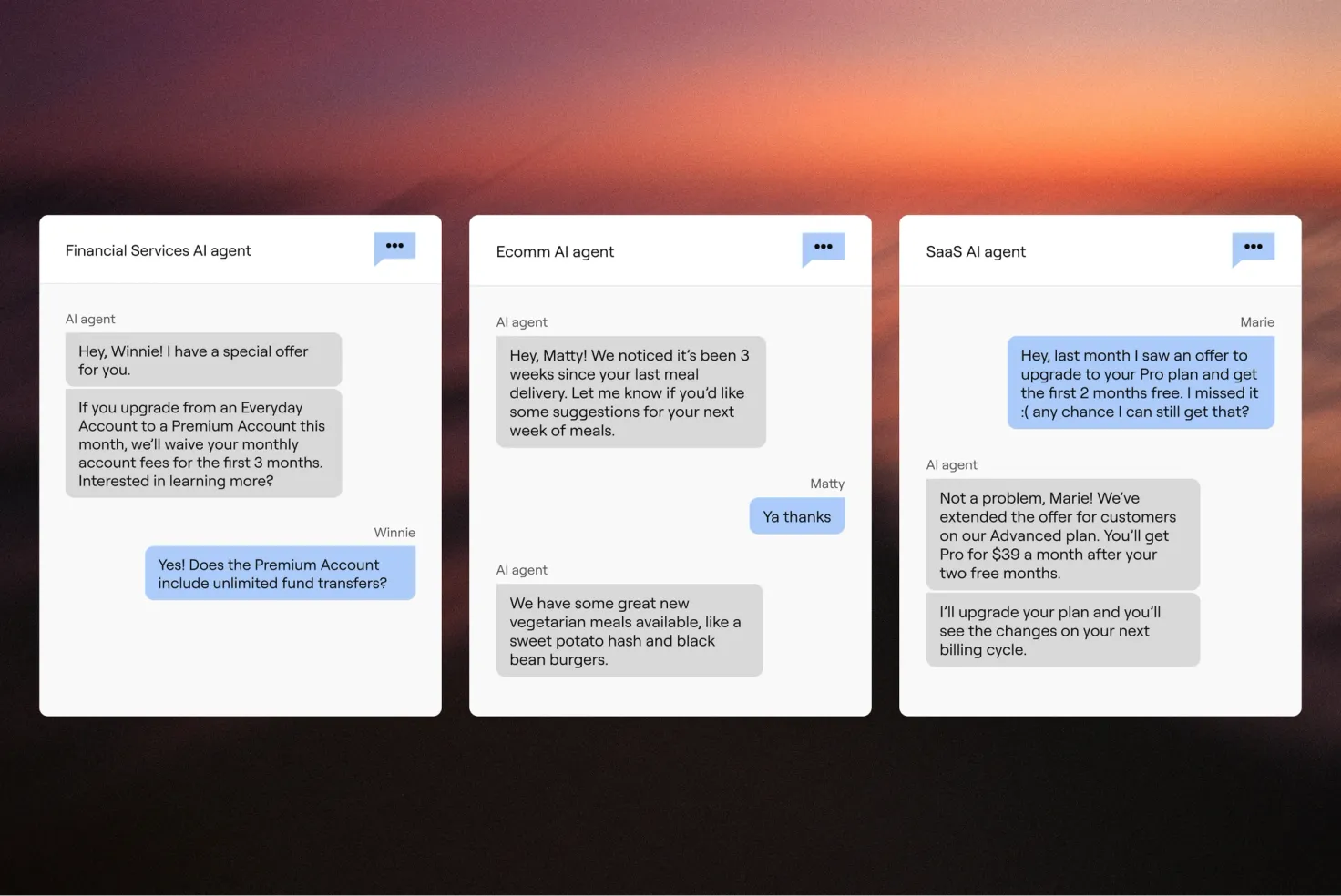
It’s not about faster responses. It’s about better outcomes at scale. Resolution isn’t just the goal. It’s the gateway to growth.
“The leaders won’t be the companies that simply use AI to run cheaper service, they’ll be the ones whose customer-facing agents are directly accountable for growing customer lifetime value. That means agents that don’t just close tickets, but retain at-risk customers, expand relationships, and personalize experiences in ways that make staying, and spending, obvious.”
The biggest misconception heading into 2026 is that launching an AI agent is the hard part. It’s not. The hard part is keeping it aligned with your business.
AI agents aren’t static software. They’re dynamic systems that evolve, learning from every conversation, adapting to changing conditions, and drifting without guidance. And like any high-performing team member, they require coaching , context, and continuous improvement.
In 2026, the winners won’t just have powerful agents. They’ll have the teams in place to run them.
That means more than assigning someone “ownership” in theory. It means designing real structures and roles to support AI operations in practice:
It’s not just a headcount shift, it’s an operating model shift. Weekly QA sprints. Clear escalation logic. Feedback loops. Versioning. Governance. These aren’t side projects. They’re table stakes.
“High-performing agents aren’t set-and-forget. They need continuous improvement, new context, and ongoing alignment with evolving strategy and policies. That includes feeding them richer customer context, sharper business rules, and clearer definitions of success.”
Ada’s community is already making moves. Across industries, we’re seeing CX teams evolve from reactive support to proactive AI operations. Customers are:
The message is clear: the next phase of AI in customer experience isn’t just about automation, it’s about operational excellence. The ones that treat it like a one-time setup task? They’ll stall out—fast.
Of all the channels ready for AI transformation, none are more urgent—or more overdue—than voice.
Legacy IVRs are still the default in most contact centers. And they’re failing . Rigid menus, long hold times, and disconnected flows are costing enterprises millions in operational waste and customer trust.
In 2026, that changes. Voice AI becomes the most strategic automation investment in customer experience .
“Voice will move from ‘a future opportunity’ to the primary automation priority and the performance benchmark for an enterprise’s entire ACX strategy.”

Modern AI voice agents don’t sound like IVRs. They sound and act like customer service professionals. They detect tone, route with precision, handle multi-intent queries, and resolve complex issues in real time with empathy and context.
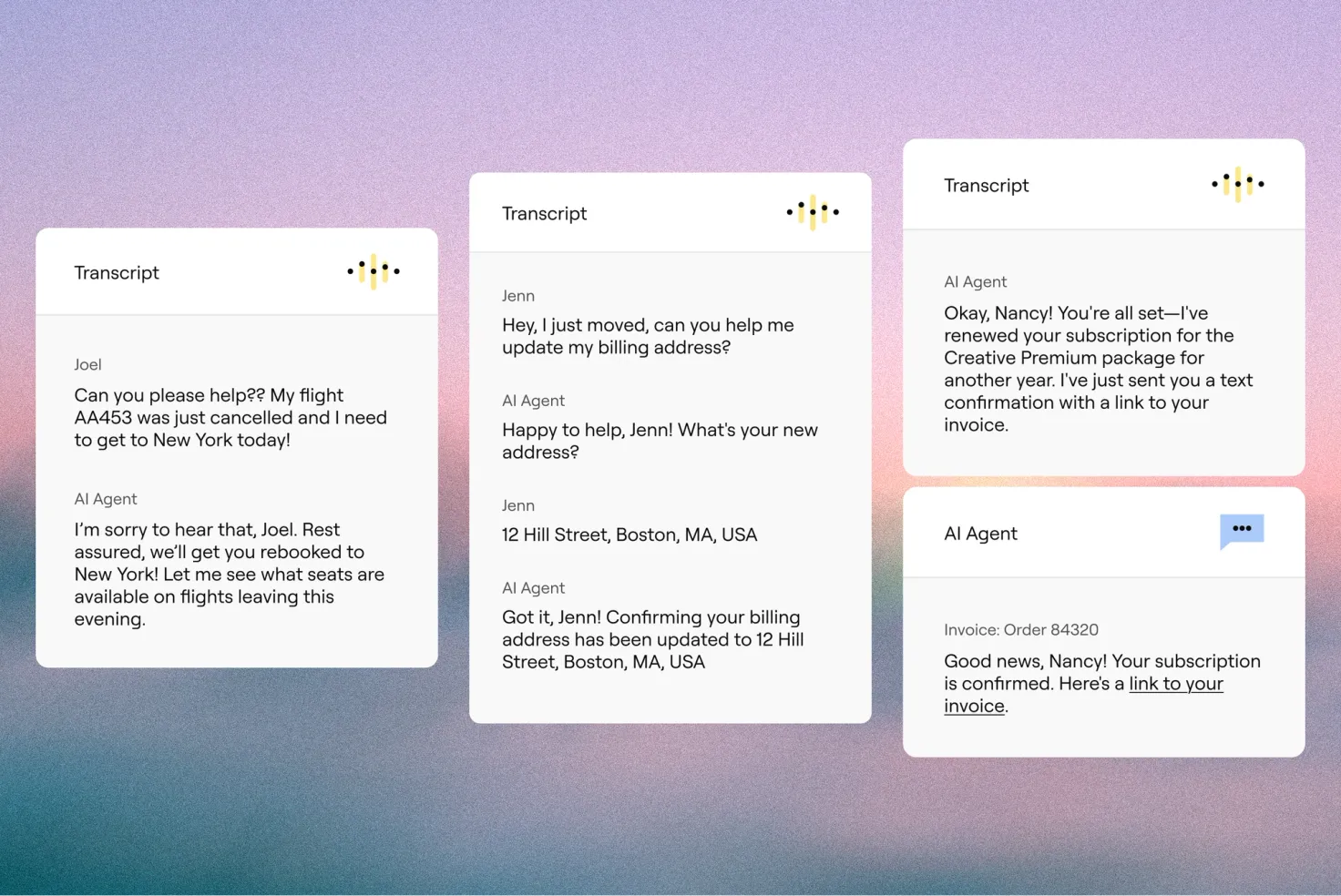
And you don’t need to rip and replace to get there. Layering voice AI on top of existing systems—starting with a single high-volume, high-friction intent—is the fastest, lowest-risk path to transformation.
But voice is just the entry point.
2026 will also bring a shift from fragmented, touchpoint-based interactions to identity-driven journeys. AI agents will no longer treat every conversation like a clean slate. They’ll remember, personalize, and act with full awareness of who the customer is, what they’ve done, and where they’re headed.
This marks a shift toward truly omnichannel customer service, where AI agents operate with full continuity across voice, chat, and messaging.
“Next year, the shift is toward identity-level personalization; every interaction will be driven by who the customer is, what they are trying to achieve, and what the business wants the journey to look like.”
This isn’t just functional. It’s emotional. Customers don’t want to start over; they want to be recognized. In 2026, that will become the baseline expectation across every channel, especially voice.
As AI agents take on more responsibility, and more visibility, trust becomes the threshold for growth. In 2026, performance alone won’t be enough. Enterprises will expect AI systems that are safe by design , governed by default, and observable at every layer.
Not just privacy policies, but precision safeguards. Not just output, but auditability. Because when an AI agent is acting on your brand’s behalf, every interaction is a moment of risk or a moment of trust.
“Companies will focus on confidence and reliability, with enterprises demanding safety, transparency, and predictable performance.”
Expect to see stricter requirements across:
This is where many AI deployments stall. It’s not the model. It’s the margin for error. And it’s why the companies that build AI systems with trust as a core principle—not an afterthought—will be the only ones ready to scale.
In 2026, trust isn’t a feature, it’s the foundation.
The competitive edge in 2026 won’t come from buying smarter software. It’ll come from building smarter systems. That means designing AI organizations that run like real teams, with ownership, metrics, and continuous improvement built in.
The most effective companies are aligning AI to CX strategy, and enabling agents to drive outcomes across every channel to deliver consistent, omnichannel customer service at scale.
“The best CX teams are starting to treat their agents as real-time research instruments, not just service channels.”
Every interaction becomes a signal. AI agents don’t just serve customers, they surface insights. Product teams use them to shape roadmaps. Marketing uses them to personalize outreach. Support uses them to preempt failure modes.
2025 proved AI works. 2026 will prove who’s ready to run it. Because AI alone won’t transform customer experience, but the right operating model will.
Before choosing the right AI customer service solution for enterprise scale, use this assessment to make sure you're set up for long-term success.
Download sheet