RFP template: Choosing AI technology for enterprise customer service
An Excel sheet containing 100+ detailed evaluation questions across seven categories in scoring-ready format you can send directly to vendors.
Learn More

Most airlines and travel brands are already using some form of automation: a chatbot answering flight status questions, a virtual assistant embedded in the app, a voice system handling basic routing.
But deploying AI isn’t the same as operationalizing it.
The opportunity in 2026 isn’t to start using AI for customer service . It’s to start doing it well. Because the difference between a brand that uses AI and one that structures it into their operating model is massive.
One deflects. The other resolves. One reduces queue volume. The other stabilizes disruption. One experiments at the edge. The other embeds AI into booking, rebooking, and loyalty workflows where revenue and trust are actually at stake.
This guide isn’t here to convince you that travel customer experience matters. You already know it does. You’ve seen contact centers flood during weather events. You’ve watched CSAT dip during IROPs. You’ve had to explain to leadership why automation rate isn’t the same as resolution.
Instead, this guide focuses on what’s working now:
Let’s get into it.
AI is already in production across the travel industry. But presence isn’t the same as maturity.
In many organizations, AI remains contained to narrow use cases. It operates at the edge of the customer experience rather than inside the workflows that truly define operations.
That distinction matters.
In travel, the difference between experimentation and operationalization determines whether your service model holds steady under pressure or fractures when disruption hits.
To understand where the industry is headed, it helps to clarify how AI in travel has evolved, and why travel customer experience demands more than surface automation.
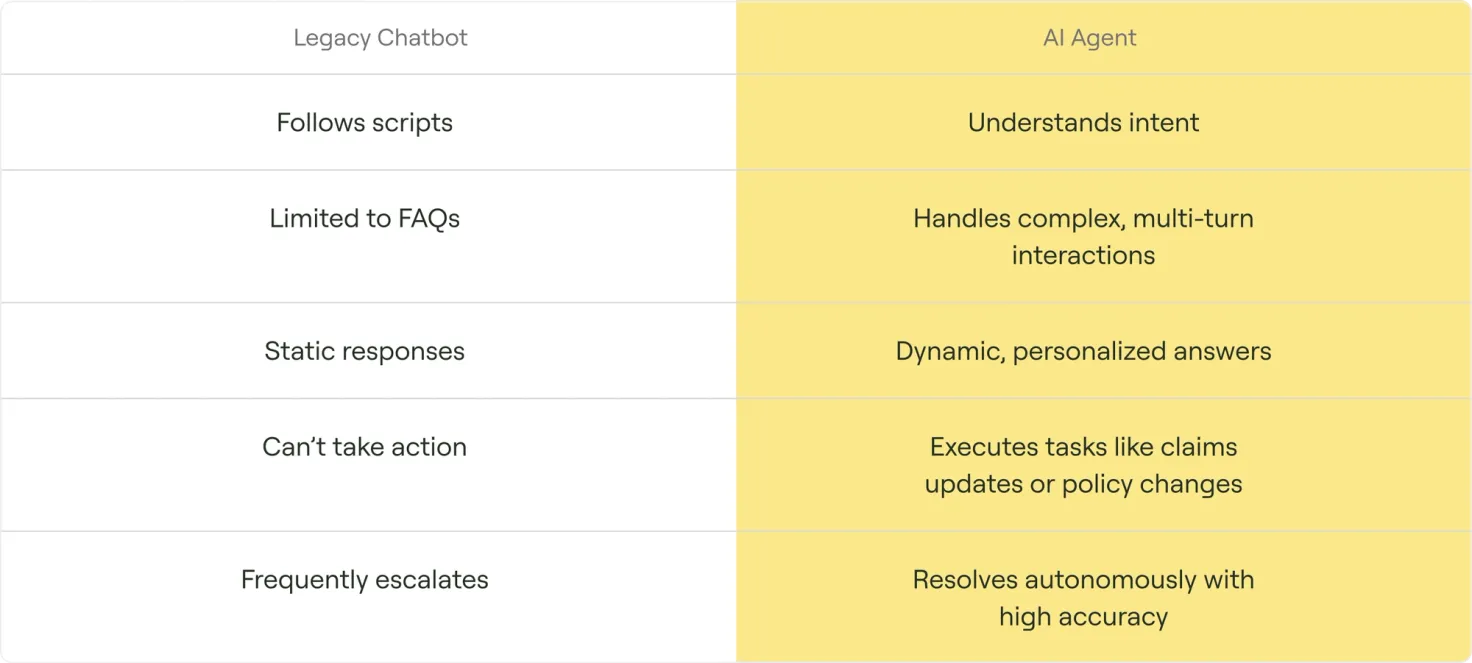
Most automation in travel still operates at the surface. It answers questions, routes calls, and follows scripts. But answering isn’t the same as resolving.
A chatbot might tell a passenger their flight is canceled. An AI customer service agent evaluates the booking, checks fare eligibility, identifies policy-aligned alternatives, applies travel credits if eligible, and presents next-best options immediately.
The shift isn’t just toward more conversational interfaces across messaging ( https://www.ada.cx/platform/messaging/ ), email , and AI voice agents . It’s toward systems that can reason within defined guardrails and execute multi-step workflows autonomously.
In travel, execution is the difference between assistance and infrastructure.
Travel doesn’t operate under steady conditions. It operates inside structural volatility.
Unlike many industries where disruption is occasional, in travel it’s built into the system. A single delay can ripple across dozens of routes and thousands of passengers within hours.
That creates conditions that most automation strategies underestimate.
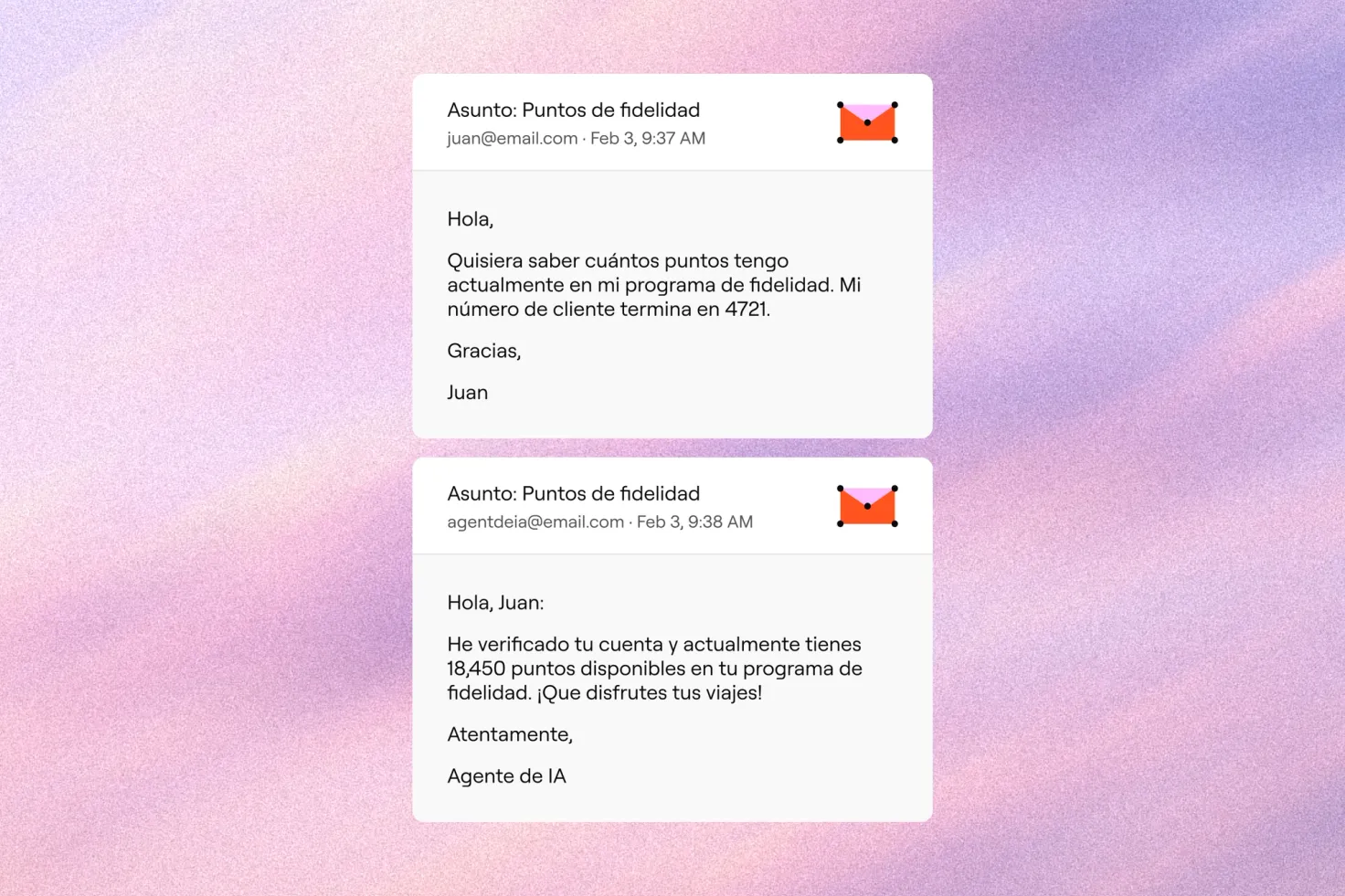
AI in the travel industry is used to automate and execute high-frequency, policy-bound workflows that define airline operations.
The most valuable AI workflows in travel are also the most operationally sensitive:
These aren’t edge cases. They’re daily volume drivers. And during disruption, they spike instantly.
When deployed correctly, AI agents retrieve live booking data, apply fare protection logic, enforce policy guardrails, execute structured workflows, and escalate only when human judgment is required.
That’s what moves AI from assistance to infrastructure.
When executives talk about the benefits of AI in the travel industry, the conversation usually starts with efficiency.
That’s fair, but it’s incomplete.
Travel runs on thin margins and fixed assets. Aircraft, crews, airport slots—none of these flex easily. When something shifts operationally, the pressure lands in customer service. That pressure shows up as longer queues, inconsistent policy application, refund spikes, and churn risk.
The real benefit of AI in travel customer experience is control. Control over volatility, over margin, and over how disruption moves through your organization. AI customer service, when built around structured execution, changes how that pressure behaves.
Disruption will always happen. Escalation doesn’t have to.
When structured workflows automate high-frequency interactions—flight status checks, rebooking eligibility, reservation updates, and loyalty balance inquiries—you remove repeatable decisions from the escalation chain.
That shift creates measurable impact:
One of the most overlooked benefits of AI in travel customer experience is financial discipline at volume. Revenue leakage in travel rarely arrives as a dramatic failure. It shows up in small inconsistencies multiplied at scale:
When AI agents apply fare logic and policy guardrails consistently, those micro-leaks shrink.
It elevates the role of human agents
Without AI customer service, travel support teams often spend a disproportionate amount of time on high-frequency, low-complexity interactions. With AI customer service agents absorbing structured workflows, human agents shift toward:
The result isn’t less human service. It’s higher-leverage human service. Burnout drops. Expertise deepens. Service quality improves in the moments that matter most.
Traditional customer service produces anecdotes. AI-powered customer service produces structured insight .
When every conversation is categorized and measured, airlines gain visibility into:
That insight doesn’t just improve support. It informs pricing, product design, and operations.
The benefit of AI in the travel industry isn’t just faster service. It’s smarter decision-making at scale.
Most discussions about AI customer service stay abstract: automation rates, efficiency, deflection. But in travel, impact shows up in specific workflows.
The highest-value use cases are the ones that spike first during disruption and quietly drive cost even when everything is running smoothly.
Here are the five workflows travel brands should prioritize .
Booking is a revenue-critical moment. From the passenger’s perspective, it’s simple: “I need to get from Toronto to Paris next Friday.”
Behind that request sit fare rules, loyalty eligibility, seat class logic, code shares, pricing differences, and payment validation.
An AI agent doesn’t just surface availability. It can:
Reducing friction here doesn’t just improve travel customer experience. It supports conversion and revenue protection.
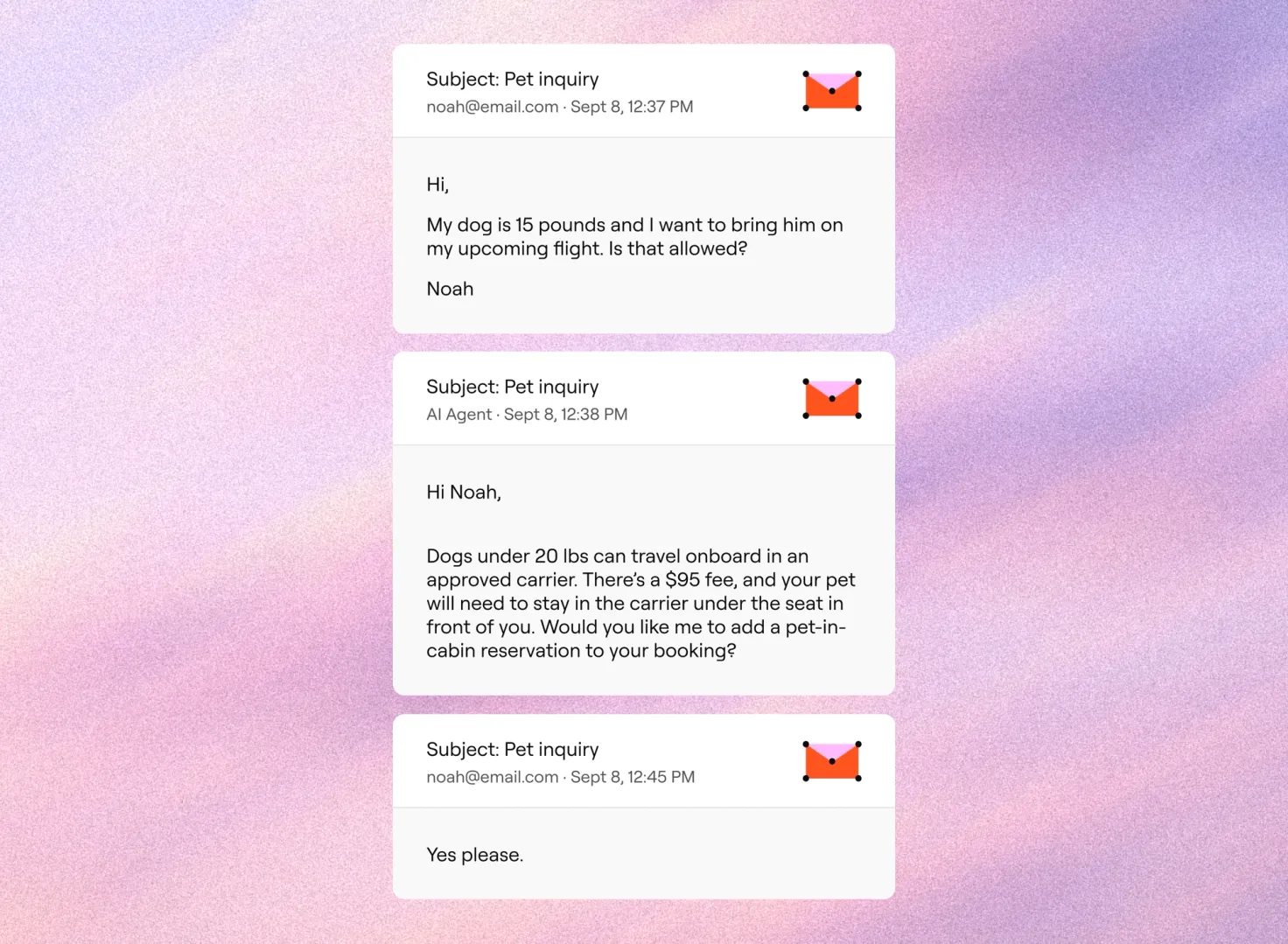
Flight status checks are constant. During disruption, they multiply instantly. Passengers ask:
These are structured, repeatable interactions—ideal for AI customer service. An AI agent can:
When answers are immediate, escalation drops. When uncertainty lingers, volume compounds. This is one of the clearest examples of how airlines use AI to improve customer service at scale.
Flight changes are where loyalty is either reinforced or lost. During irregular operations, passengers aren’t looking for explanations. They’re looking for action.
An AI agent operating within defined guardrails can:
This is how airlines handle disruption with AI safely: by executing policy-aligned workflows instead of improvising responses.
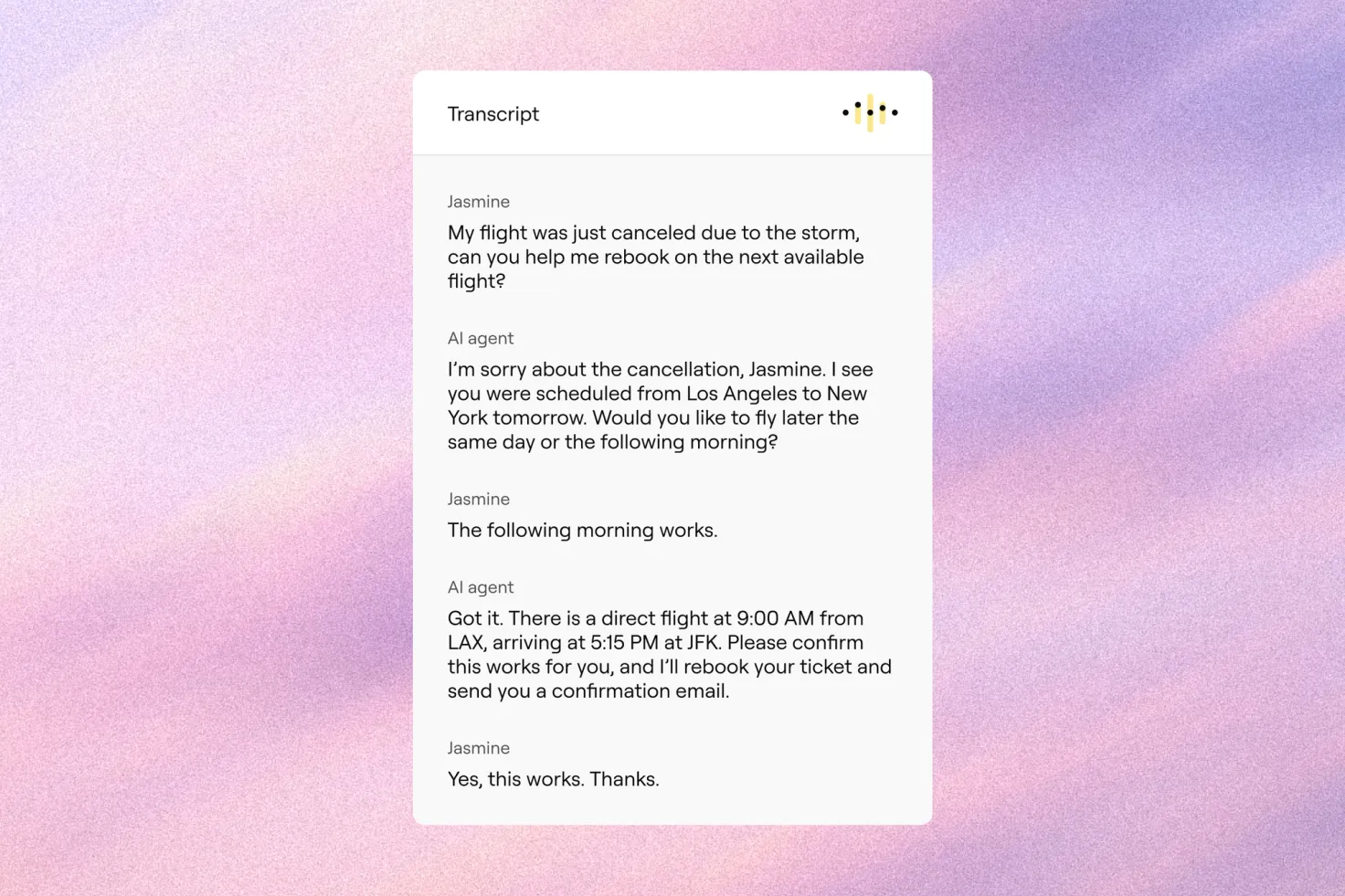
Loyalty programs represent long-term growth, but only if passengers can access and understand their benefits. Passengers regularly ask:
AI customer service agents make loyalty visible and actionable by retrieving balances, explaining tier benefits clearly, and surfacing eligible upgrades.
This isn’t just cost reduction. It’s engagement.

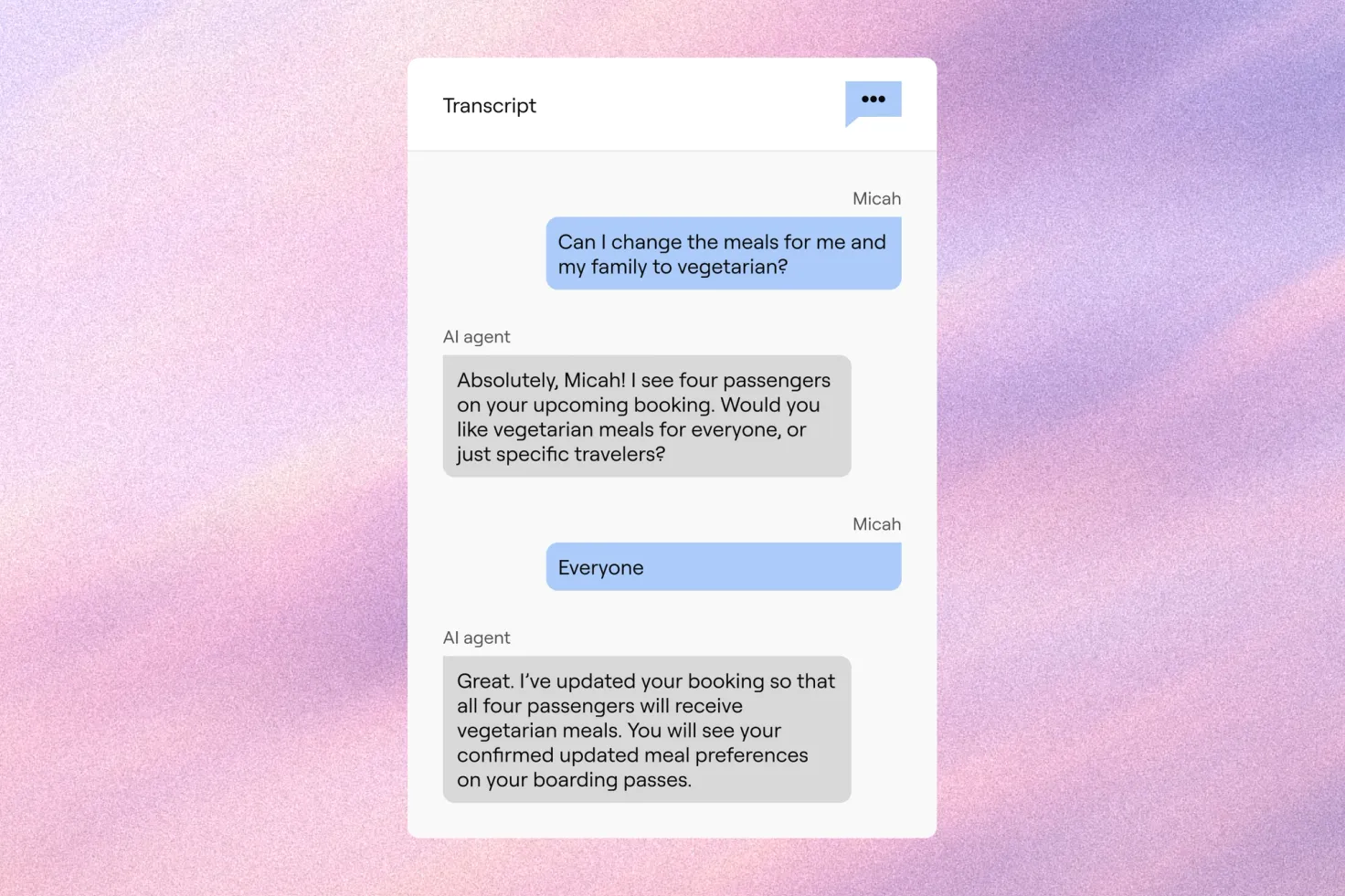
Seat changes . Meal preferences. Contact updates. Minor itinerary corrections.
Individually simple, but collectively high volume.
AI agents treat these as structured actions rather than open-ended conversations. They can retrieve reservations, apply updates within policy, confirm changes, and send updated confirmations.
For operations leaders, this reduces repetitive workload without sacrificing control. For passengers, it restores autonomy.
Evaluating AI for travel requires a different mindset than evaluating AI for ecommerce or SaaS . Travel runs on constraints. If the system cannot operate safely within those constraints, it cannot scale.
The evaluation should focus less on conversational flair and more on operational discipline.
A polished demo means very little if the system cannot execute real workflows. Rebooking is a useful stress test.
It requires:
If a platform cannot orchestrate that end-to-end across core systems, human agents remain the bottleneck. That’s assistance, not transformation.
Are all AI customer service agents the same? How can you differentiate between truly intelligent AI and basic automation wearing an AI mask? We break it down.
Learn more
When assessing an AI customer service platform for travel, look for:
If even one of these is missing, risk increases. In travel, risk scales quickly.
AI in the travel industry is not static. Routes change. Fare structures evolve. Loyalty programs update. Partner agreements shift.
A serious platform should make it easy to:
If optimization is difficult, performance will plateau. And in travel, plateauing performance is a competitive disadvantage.
AI is moving closer to the core of how travel brands actually function. The shift isn’t cosmetic, it’s architectural.
The airlines that treat AI as an experiment will see incremental gains. The airlines that embed agentic customer experience into their operating mode l will build compounding competitive advantage.
The future of AI in travel isn’t about sounding more human or adding more channels. It’s about designing systems that execute reliably inside tight constraints, apply policy consistently at scale, and protect both revenue and trust during disruption.
In an industry defined by unpredictability, the competitive edge won’t belong to the brand with the flashiest automation.
It will belong to the brand whose service model holds steady when everything else moves.
That’s where AI in the travel industry is headed—not toward louder automation, but toward quieter control.
Cebu Pacific partnered with Ada to bring an AI agent into their customer care team, taking another step forward in their innovation journey.
Learn more