RFP template: Choosing AI technology for enterprise customer service
An Excel sheet containing 100+ detailed evaluation questions across seven categories in scoring-ready format you can send directly to vendors.
Learn More

If your support team relies on scripted chatbots, the ones built on rigid decision trees, pre‑defined flows, and endless “if this, then that” logic, you already know the limitations.
They’re effective at handling predictable, repeatable inquiries. But as customer expectations rise and your business expands across brands, channels, and regions, maintaining those static flows becomes a full-time job.
Eventually, even the most well-structured scripts struggle to keep pace. They work until they don’t.
Blackhawk Network (BHN) knows this firsthand. Their CX automation journey began with a scripted chatbot—one that delivered early wins by reducing ticket volume and freeing agents to focus on more strategic work.
It was a strong start. But as BHN scaled, the team saw signs that their CX automation model needed to evolve.
Rather than layering on more scripts, they took a different approach; BHN transitioned to AI customer service agents that could reason, adapt, and improve over time to support a growing portfolio of brands and increasingly complex use cases.
If your customer service team is reaching the limits of scripted automation, BHN’s story offers a clear next step. In this post, we break down BHN’s migration and highlight how their AI agent went from scripted responder to strategic teammate.
BHN’s scripted chatbot fulfilled its original purpose: helping the team at Tango Card (before it became part of BHN) deflect routine tickets, operate efficiently with a lean team, and build early momentum for CX automation.
But success brings scale, and scale brings complexity.
As BHN’s ecosystem expanded, so did the demands on its CX automation. Each new product, use case, or region required additional scripted logic. The team found themselves spending more time maintaining content and less time improving outcomes.
Rather than stretch the model past its limits, BHN made a strategic decision to adopt a more dynamic, scalable approach. By transitioning to AI customer service agents built with generative capabilities, they created space for both the AI and the team to grow.
The shift unlocked smarter self-service, deeper collaboration between agents and AI, and a more sustainable model for scaling customer support across the business.
Unlike traditional chatbots, AI customer service agents aren’t limited to rigid scripts or pre-defined flows . They use large language models (LLMs) and contextual reasoning to interpret customer intent, determine the right resolution, and take action across channels, languages, and use cases.
Where chatbots follow a path, AI agents adapt. They don’t just respond, they resolve.
Scaling with AI doesn’t start with the AI itself. It starts with building the right foundation.
Before BHN expanded automation across brands and channels, they made intentional investments to ensure their AI customer service could perform at a high level. That meant rethinking systems, teams, and the entire operating model.
Together, these foundational moves enabled BHN to deploy an AI customer service agent that could perform like a real teammate, not just a better bot.
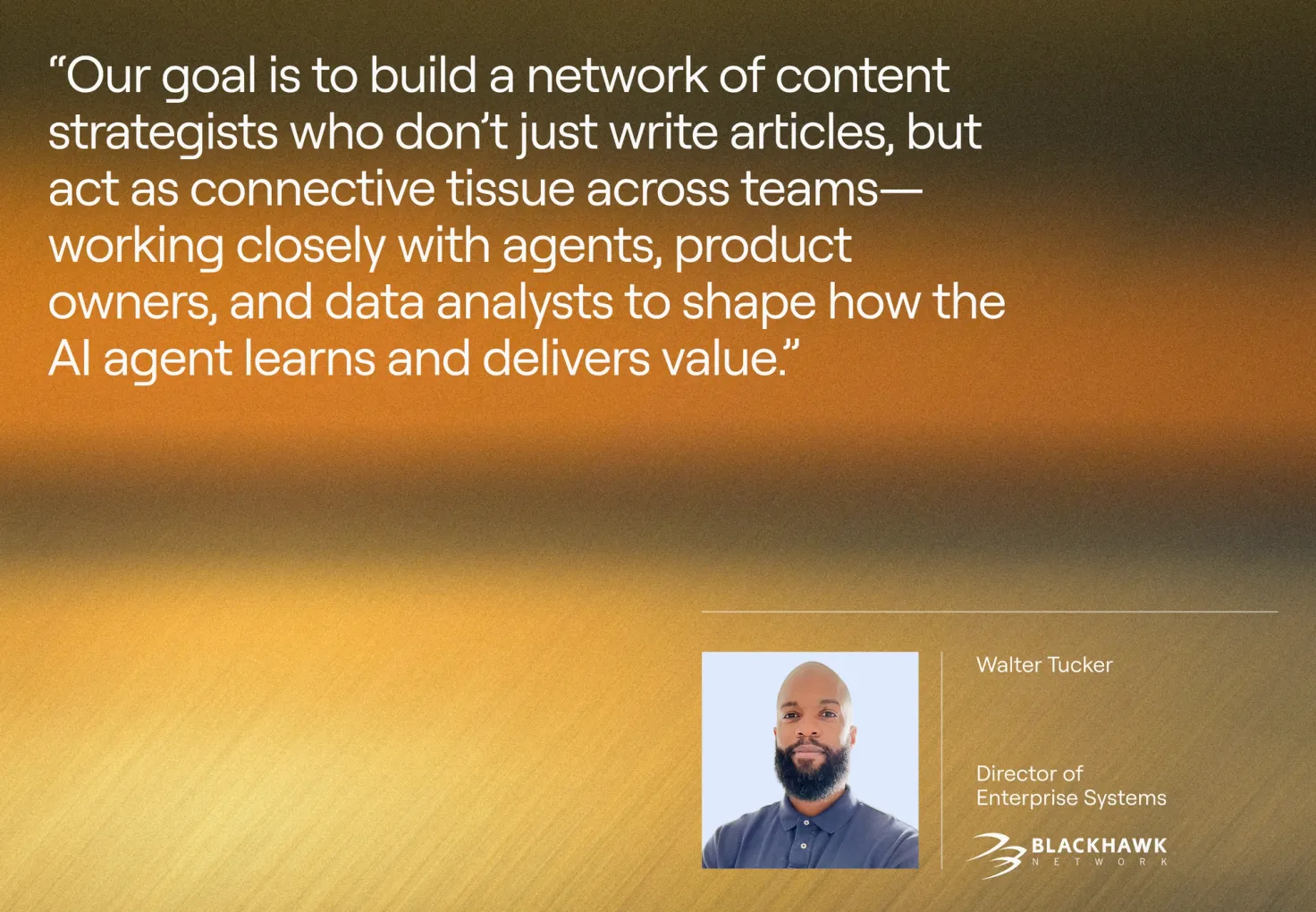
With that foundation in place, BHN was able to scale confidently.
Their AI customer service agent now supports multiple brands and business lines across web, chat, in-product experiences, and voice—with email support on the roadmap. Instead of managing separate flows for each channel, the team uses shared actions and structured content, all orchestrated through Ada’s platform.
The AI customer service agent is deeply embedded in their operations. It pulls from multiple knowledge sources and connects to integrated systems to:
And just like any top-performing employee, it’s supported by a system of continuous coaching.
BHN’s human agents now act as mentors to the AI—reviewing transcripts, identifying optimization opportunities, and helping the AI learn and improve. Weekly roadmap reviews bring together Product, Engineering, and Support leaders to align CX automation performance with business outcomes.

After the migration, BHN didn’t just get a “better chatbot.” They got a system that could manage real complexity and improve over time, with:
The result? A support experience that’s faster, more flexible, and always on, and one that keeps pace with customer expectations and business growth.

BHN’s story offers a practical, proven path for any team looking to evolve their CX automation. A few key lessons stand out:
If you’re considering a move from scripted automation to generative AI, here’s a simplified playbook inspired by BHN’s success:
Done right, the move to generative AI becomes more than a technology upgrade. It’s a shift in how your customer service team operates and delivers value.
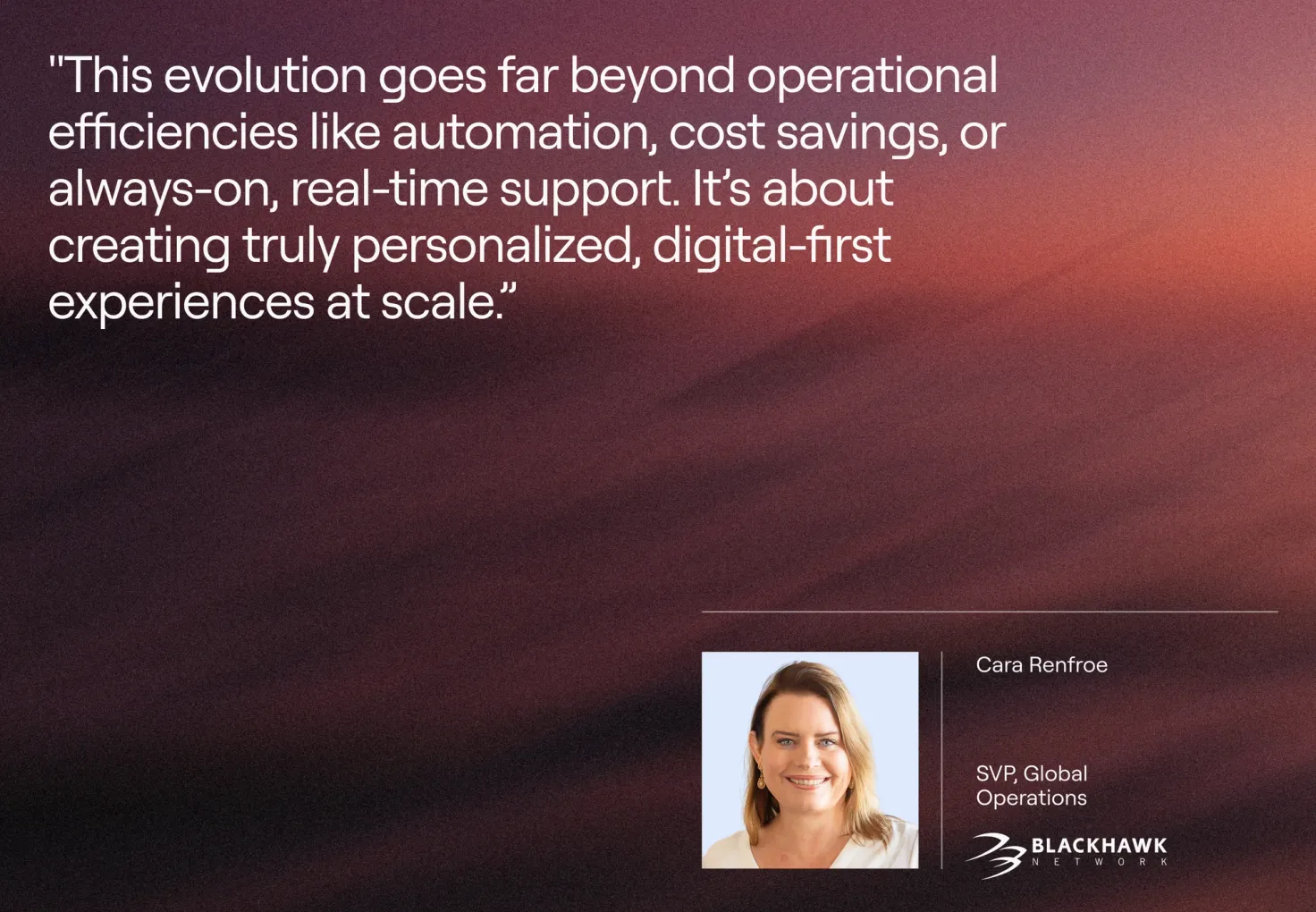
By evolving their approach to match the needs of a growing business, BHN unlocked a new model for customer experience—one where AI customer service agents aren’t just reactive, but proactive partners in delivering value.
It’s about recognizing when to level up, and having the right strategy, structure, and partner to do it confidently.
BHN didn’t abandon their early investment in CX automation, they built on it.
With Ada’s generative platform and a mature AI operating model, BHN now runs a leaner, smarter, and more scalable support function, powered by AI customer service agents that act like true members of the team.
So here’s the question: What could your support team accomplish if your AI agent wasn’t just answering questions, but owning resolution? It might be time to find out.
From upskilling agents into AI collaborators to deploying automation across brands and channels, Blackhawk Network is proving what’s possible when customer service becomes a strategic engine for growth.
Learn more