RFP template: Choosing AI technology for enterprise customer service
An Excel sheet containing 100+ detailed evaluation questions across seven categories in scoring-ready format you can send directly to vendors.
Learn More

Here’s the uncomfortable truth: most enterprise AI customer service initiatives don’t fail because the technology is flawed. They fail because the organization wasn’t ready to support AI once it moved beyond a pilot.
We’ve seen this pattern repeatedly. An enterprise launches an AI agent with real promise. Early containment looks strong. A handful of use cases perform well. There’s optimism that AI will finally take pressure off customer service and support teams.
Then momentum slows.
Containment plateaus. Escalations increase. Customer satisfaction stagnates or quietly declines. Teams start questioning whether the AI is sophisticated enough, whether the model needs upgrading, or whether a different platform would perform better.
But in most cases, that’s a misdiagnosis.
What breaks down isn’t the AI. It’s everything around it: the systems and data meant to support it, the teams meant to own it, and the operating assumptions meant to guide it once it’s live.
That gap between ambition and organizational readiness is where most AI customer service initiatives lose traction. It’s also where the real opportunity lies.
Most AI strategies don’t fail because teams misunderstand what AI can do. They fail because teams underestimate what it takes to run AI over time.
In the rush to show progress, enterprises focus on pilots, platforms, and proof points. They define use cases, map journeys, and launch AI agents. All of that feels tangible. Productive. Forward-looking.
What often gets skipped is a harder question: is the organization itself prepared to carry the weight of AI once it’s live?
Readiness isn’t exciting. It doesn’t demo well. It sounds like governance, process, and alignment—things that feel slow compared to shipping an AI experience. So teams move ahead without it.
That doesn’t make the gaps disappear. It just delays when they show up. Instead of blocking launch, they surface later as stalled adoption, rising costs, brittle performance, and internal skepticism about whether AI is really worth the effort.
Tool-first thinking can get you early wins. Foundation-first thinking is what keeps those wins from fading.
When AI underperforms for enterprise customer service, it’s rarely random. It’s a signal.
Supporting AI at scale requires new operating models, clear ownership, and systems that allow AI to actually resolve issues end to end. Without those foundations, even the most advanced tools struggle to deliver consistent value.
Across enterprise environments, the same breakdowns appear again and again:
What makes this especially damaging is how these issues compound. Unclear ownership makes it harder to improve content. Fragmented systems increase escalations, which erode trust in AI. Over time, teams stop expanding use cases not because AI can’t handle them, but because the organization can’t support them.
From the outside, it looks like an AI problem. But inside the organization, it’s a readiness problem unfolding slowly and quietly.
Which raises the real question: if readiness is the constraint, what does being “ready” actually mean?
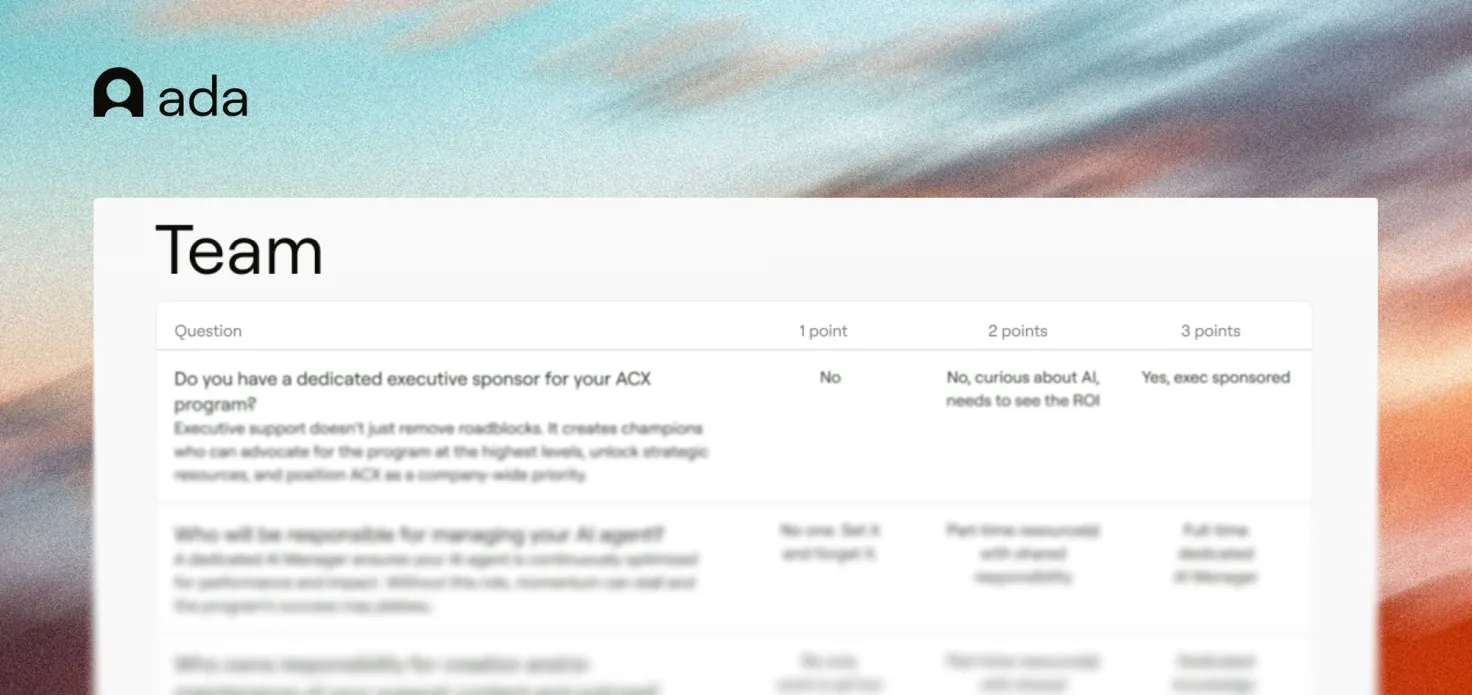
Ready to diagnose your AI readiness? Get the assessment .
Enterprise AI readiness is inherently more complex. It requires coordination across teams, systems, and governance structures that don’t exist at smaller scales.
Startups can build AI support systems in a sprint. Enterprises are navigating:
The same complexity that makes enterprises powerful also makes AI initiatives harder to operationalize without intentional preparation. It’s not just about standing up an AI agent, it’s about orchestrating a system that can sustain it every day, across every channel, and at scale.
Faced with this level of complexity, guessing isn’t a strategy.
Once you stop treating readiness as an abstract idea, it becomes surprisingly concrete.
In enterprise customer service, AI readiness isn’t about having access to AI. It’s about having the structure and support required to operate AI as part of everyday service delivery—consistently and at scale.
That readiness tends to show up across a small set of interconnected conditions:
These aren’t best practices in the abstract. They’re the conditions that determine whether AI can move beyond narrow use cases and become a reliable part of customer service operations. When even one is missing, performance may look acceptable in isolation but fragile under real-world pressure.
Once teams start to see where readiness breaks down, the instinct is often to revisit technology decisions.
That’s understandable. Models and platforms matter. But they’re rarely the limiting factor.
Most AI struggles in customer service aren’t product issues. They’re support issues. Without ownership, AI doesn’t improve. Without clean, connected data, it can’t personalize or resolve. Without the right systems, it can’t act.
Readiness determines whether AI delivers isolated wins—or sustained impact.
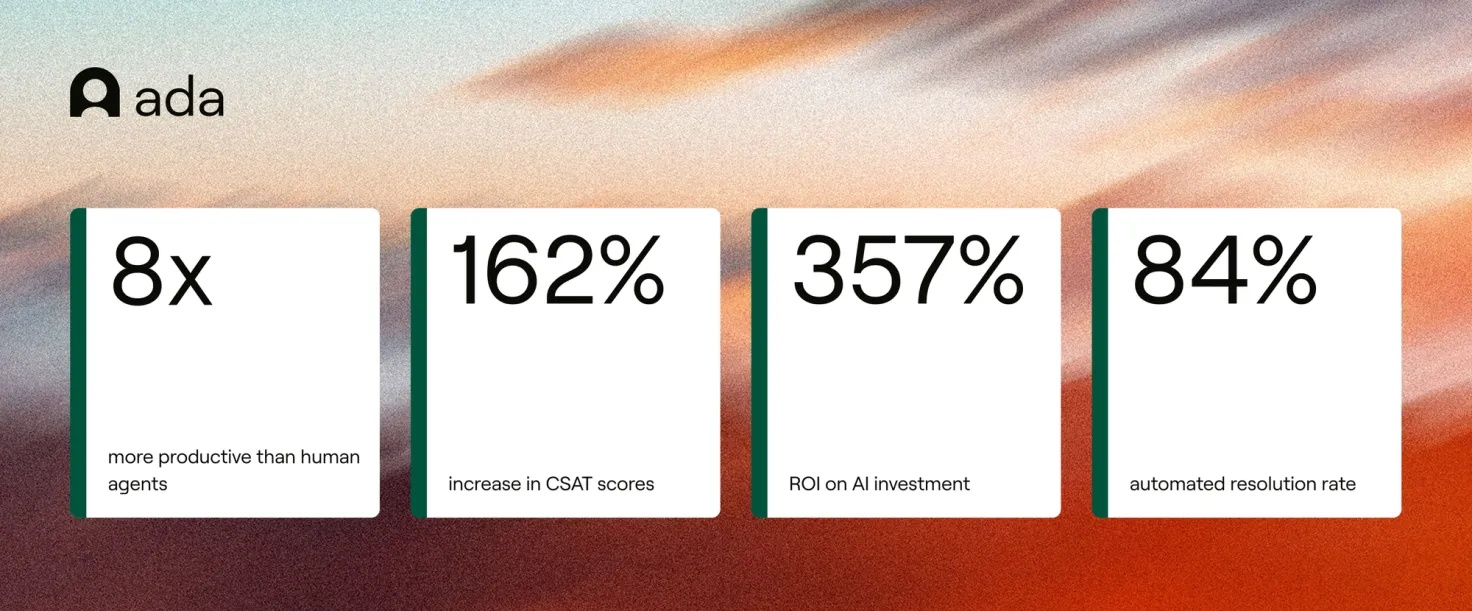
Looking for results like these? Assess if your enterprise is ready .
Leading enterprises don’t wait until things break. They get ahead of it.
Rather than assuming readiness—or discovering gaps after AI stalls—they seek clarity early. They look for where organizational friction will limit AI performance before investing further in tools or expansion.
When enterprises take a structured look at readiness, the results are often surprising. Teams confident in their AI strategy uncover gaps in ownership or content they hadn’t considered. Teams focused on tooling realize their biggest constraints are organizational. And teams hesitant to scale AI often discover the blockers aren’t technical at all.
That kind of visibility allows leaders to focus on the right problems, anticipate resistance, and build trust that AI is worth betting on.
Understanding your organization’s AI readiness reduces risk, accelerates time to value, and prevents costly misalignment during AI deployment.
Before you spend another quarter scaling pilots, evaluating vendors, or chasing AI goals, you deserve a clear view of where things stand—not just where the agent is, but where your organization is.
Because great AI agents don’t succeed in isolation. They succeed in organizations that are ready for them.
Before choosing the right AI customer service solution, it’s important to understand where your organization is at now. This assessment helps you answer that question with clarity and chart the right course forward.
Take assessment