RFP template: Choosing AI technology for enterprise customer service
An Excel sheet containing 100+ detailed evaluation questions across seven categories in scoring-ready format you can send directly to vendors.
Learn More

Let’s be honest: no one loves their IVR. Not the customers navigating endless menus. Not the teams stuck maintaining systems no one understands. And definitely not the leaders trying to justify it in a world now driven by AI voice agents.
IVRs were built for an era when automation meant dictating to the customer instead of listening to them. These systems were designed to contain conversations rather than connect people. And while they’ve technically “worked” for decades, they’ve never delivered what today’s customers expect: fast, personalized, intelligent service.
So if everyone knows IVR is dead, why is it still everywhere? The short answer is fear.
And I get it. I’ve been in the room with enterprise teams staring down years of technical debt, legacy platforms no one wants to touch, and real concern about what happens if they break something that’s “technically still working.”
But AI adoption in contact centers is accelerating fast. Over 70% of contact centers increased their AI spending in 2023 and 2024, and 68% of organizations reported plans to increase their AI budgets in 2025. And every second wasted in an outdated IVR system is a lost opportunity to build loyalty or drive revenue.
The risk isn’t making a move—it’s standing still as the world moves by you.
Here’s what’s really holding teams back from modernizing their voice stack, what “killing the IVR” actually looks like in practice, and why layering AI on top (rather than ripping everything out) is the most strategic move you can make.
In my experience, the hesitation to move away from legacy IVR systems isn’t a lack of motivation. These are thoughtful teams, often desperate to invest in innovation that actually moves the business forward. But they’re facing structural complexity and years of technical debt.
Here’s what teams are up against:
But just because your IVR system works doesn’t mean it’s working for you.
The real cost of legacy IVR isn’t the license fee. It’s the missed opportunity. Every minute your customers are trapped in menu trees, waiting in queues, or repeating themselves is a moment they’re forming an opinion about your brand, and likely, not a good one.
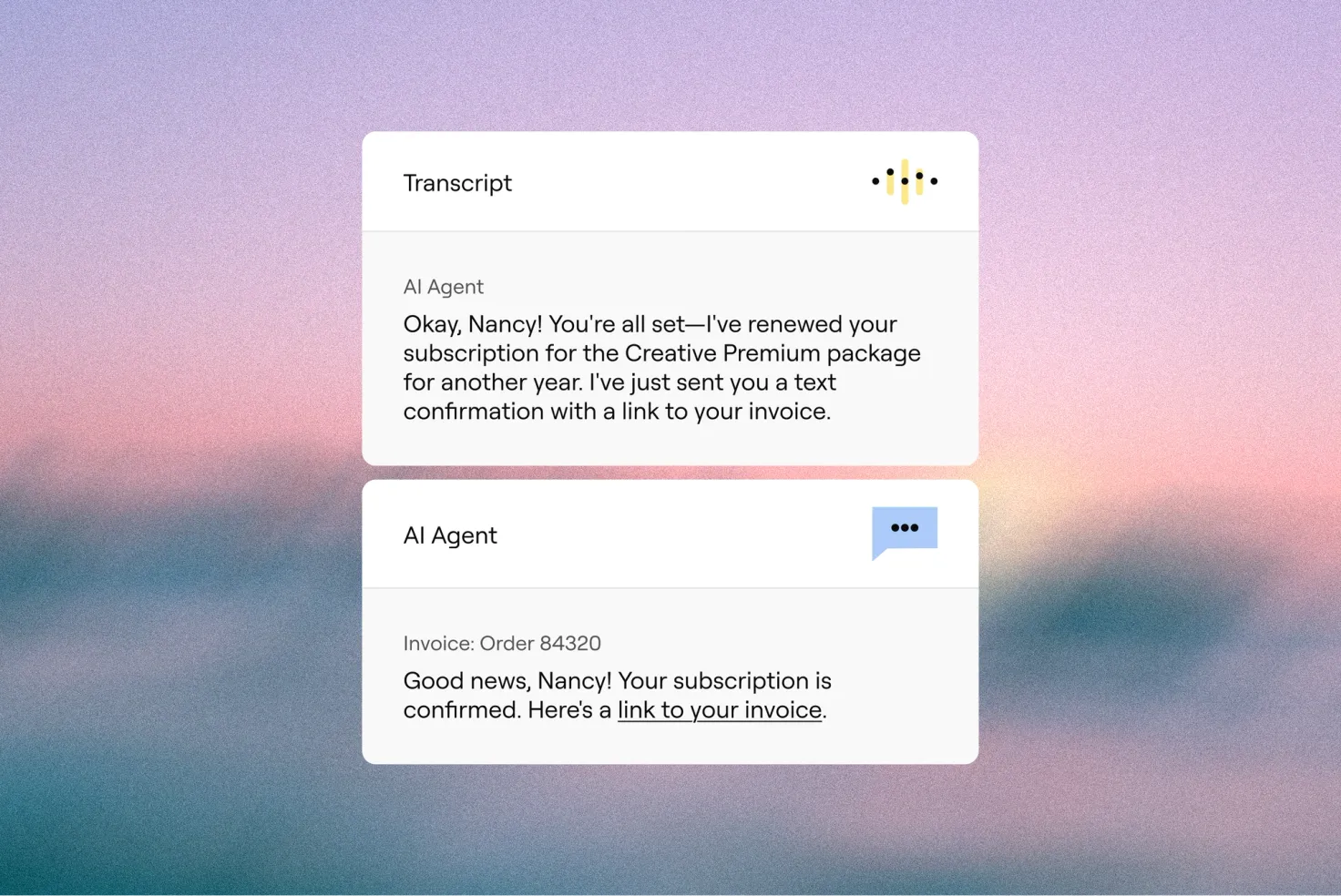
One of the most common misconceptions I run into is that modernizing your voice experience means ripping out your entire stack. And that implementing voice AI means a full replatform.
It doesn’t.
Modern voice AI doesn’t require you to “rip and replace” your CCaaS or IVR overnight. At Ada, we layer on top of what’s already there, and we start by intercepting the right moments.
Here’s what that looks like in practice:
This method is tried and tested, allowing for fast time-to-value with minimal risk. We deliver real value early—shorter handle times, better routing, increased containment—without touching the delicate systems that everyone’s afraid to break.
Then, once teams are confident and seeing results, we expand. We use voice analytics and agentic call analytics to decide what to automate next. Over time, legacy flows get migrated and legacy IVR automations are deprecated as agentic flows are phased in.
This phased approach is one of the biggest advantages of using an AI voice agent platform like Ada. You don’t need to start from scratch, because it’s not about disruption. It’s about direction.
Voice AI isn’t a risk, it’s actually a de-risking strategy.
There’s still a lot of content floating around trying to explain what IVR is, how it works, or whether it’s “still relevant.”
Let’s stop pretending that’s the conversation.
We’re long past the awareness phase. Every enterprise leader I talk to already knows what IVR is, and more importantly, how limiting it’s become. They’re not asking, “What is IVR?” They’re asking, “How do we get out of this without breaking everything?”
That’s the shift. Contact center leaders don’t need another AI buzzword, boilerplate demo, or list of features. They need a strategy and a way forward.
What comes next is an AI voice agent that actually acts like a service professional, not a gatekeeper. Voice automation that doesn’t wait to be triggered by button presses. One that listens, understands, adapts.
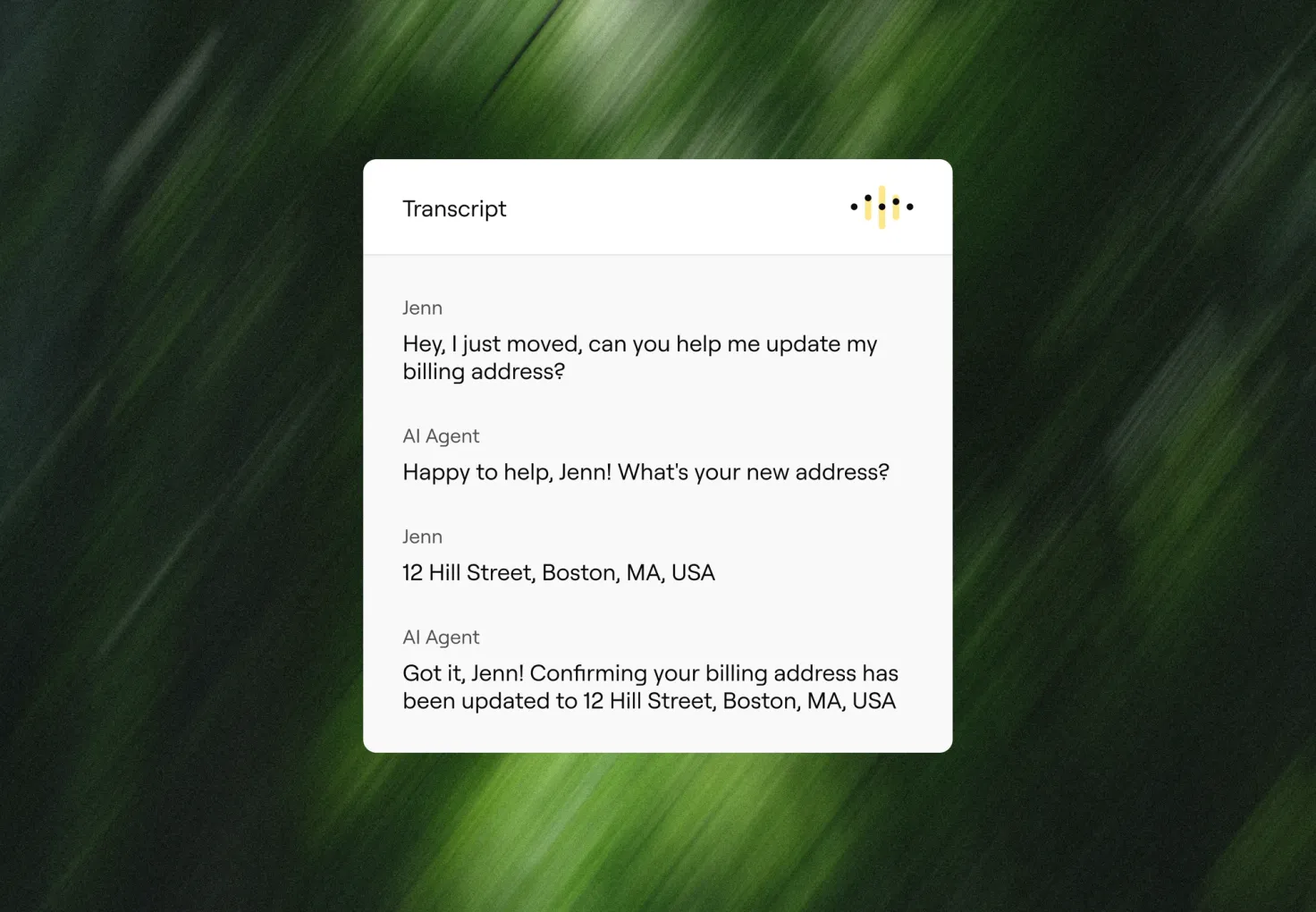
The next generation of voice experience:
And unlike IVR, it improves with time.
There’s always a moment when the lightbulb goes on.
Sometimes it’s after seeing a demo: watching a voice agent answer naturally, hand off cleanly, and adapt its tone mid-conversation. Sometimes it’s just a single sentence that reframes everything.
For me, the most effective pivot point often comes when we talk about time.
Forget the next quarter, look ahead to 2027. Gartner, Forrester, McKinsey, they all say the same thing: by 2027–2028, AI won’t just influence or assist customer service interactions. It will run them end-to-end.
That’s the future contact centers need to prepare for, and it’s just not possible with a traditional IVR.
And once you show a CX leader that staying put isn’t neutral—it’s actually moving backward—that’s when the energy shifts. Voice AI stops being a why not and starts being a why now. The question becomes: Do we lead now while it's still a differentiator or scramble later when it's just table stakes?
That’s the click. The realization that this isn’t just about automation. It’s about relevance.
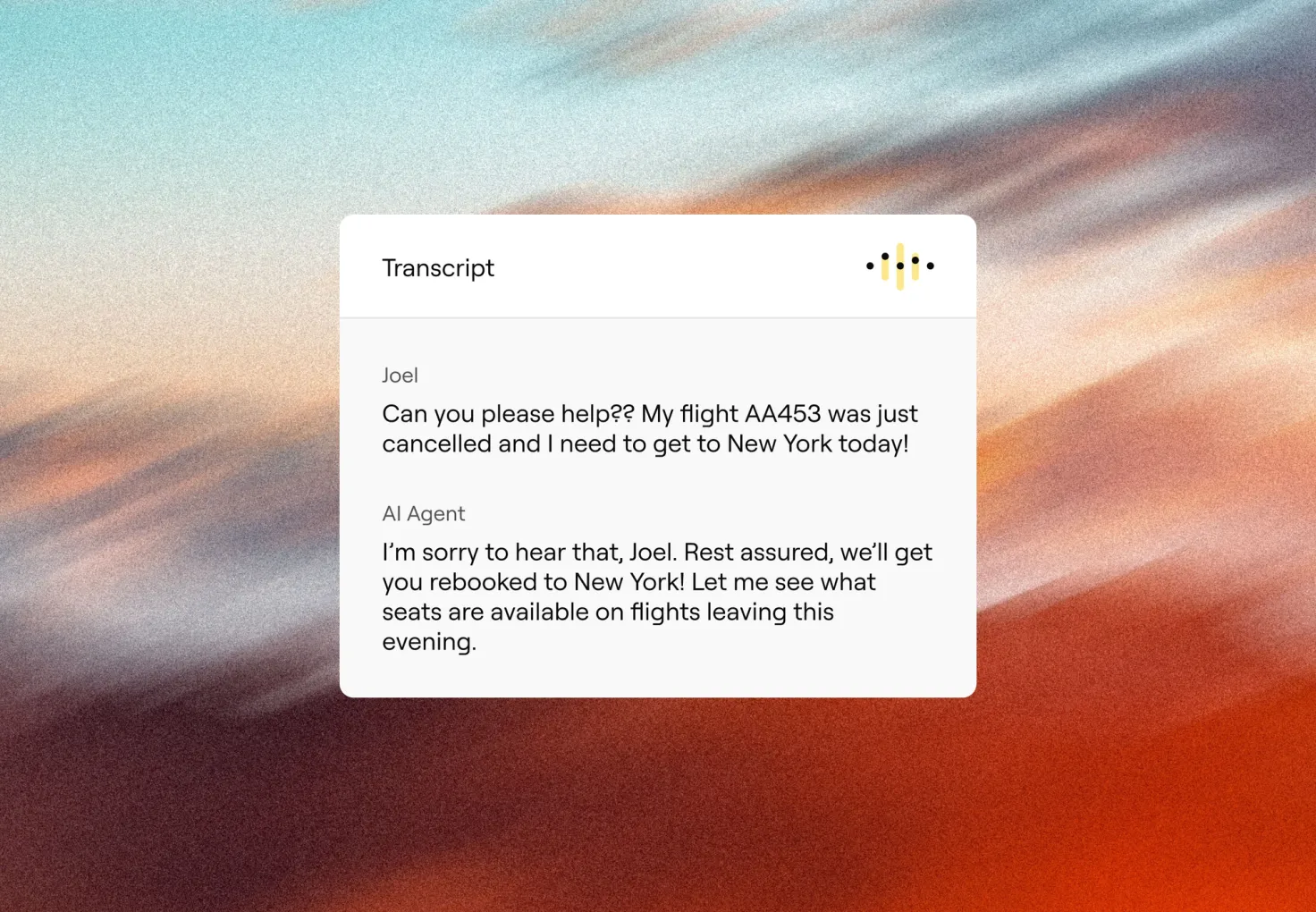
I never tell teams they need to “kill the IVR” just to be provocative. I say it because we’ve reached the same kind of inflection point we’ve seen in tech time and time again.
It’s like moving from PalmPilot to iPhone. From server cards to keyboards. From search to generative.
These aren’t incremental changes. They’re full-on shifts in how we interact with technology, and they feel obvious in hindsight. That’s exactly where we are now with voice.
This isn’t about finding a slightly better way to press 1 for billing and 2 for support. It’s about creating an entirely new interaction model. One where customers speak naturally, where AI handles the basics, and where human agents are reserved for high-impact moments that deserve them.
When you make that shift, something bigger happens. Voice doesn’t just become more efficient, it becomes more valuable.
It starts with Average Handle Time (AHT). Containment. Deflection. ROI. But the real shift happens when those metrics grow into something more impactful: Lifetime Value (LTV), retention, and growth. Then, it isn’t just a CX project anymore—it’s a boardroom priority.
That’s the real transformation. And it doesn’t start with ripping anything out. It starts with choosing to evolve.
Here’s what comes next:
The IVR is dead. What comes next is yours to define.
This guide gives you a practical roadmap to move beyond IVR and benefit from the power of AI voice agents for customer service.
Get the guide