RFP template: Choosing AI technology for enterprise customer service
An Excel sheet containing 100+ detailed evaluation questions across seven categories in scoring-ready format you can send directly to vendors.
Learn More

Every AI for customer service business case tells a similar story.
You walk into the CFO's office with a deck. You show current headcount costs. You model out how many interactions AI can deflect. You divide one by the other, subtract the licensing fee, and call the difference savings.
It's clean. It's logical. And it's almost universally how enterprises are getting their AI investments approved today.
But Gartner just told us the math doesn't close.
Gartner predicts that 50% of companies that cut customer service staff due to AI will rehire those roles by 2027 —often under different job titles, but performing essentially the same functions. Gartner also argues that more than half of customer service organizations will double their technology spend by 2028 , without a proportional reduction in headcount.
That's not a prediction that AI will underperform. It's a statement about what enterprises fundamentally get wrong about AI for customer service .
The enterprises that figured out this distinction early are running a different playbook, one where the ROI isn't built on the infrastructure to unlock what AI is actually capable of.
The headcount reduction model is seductive because it's simple. But it systematically underestimates two things.
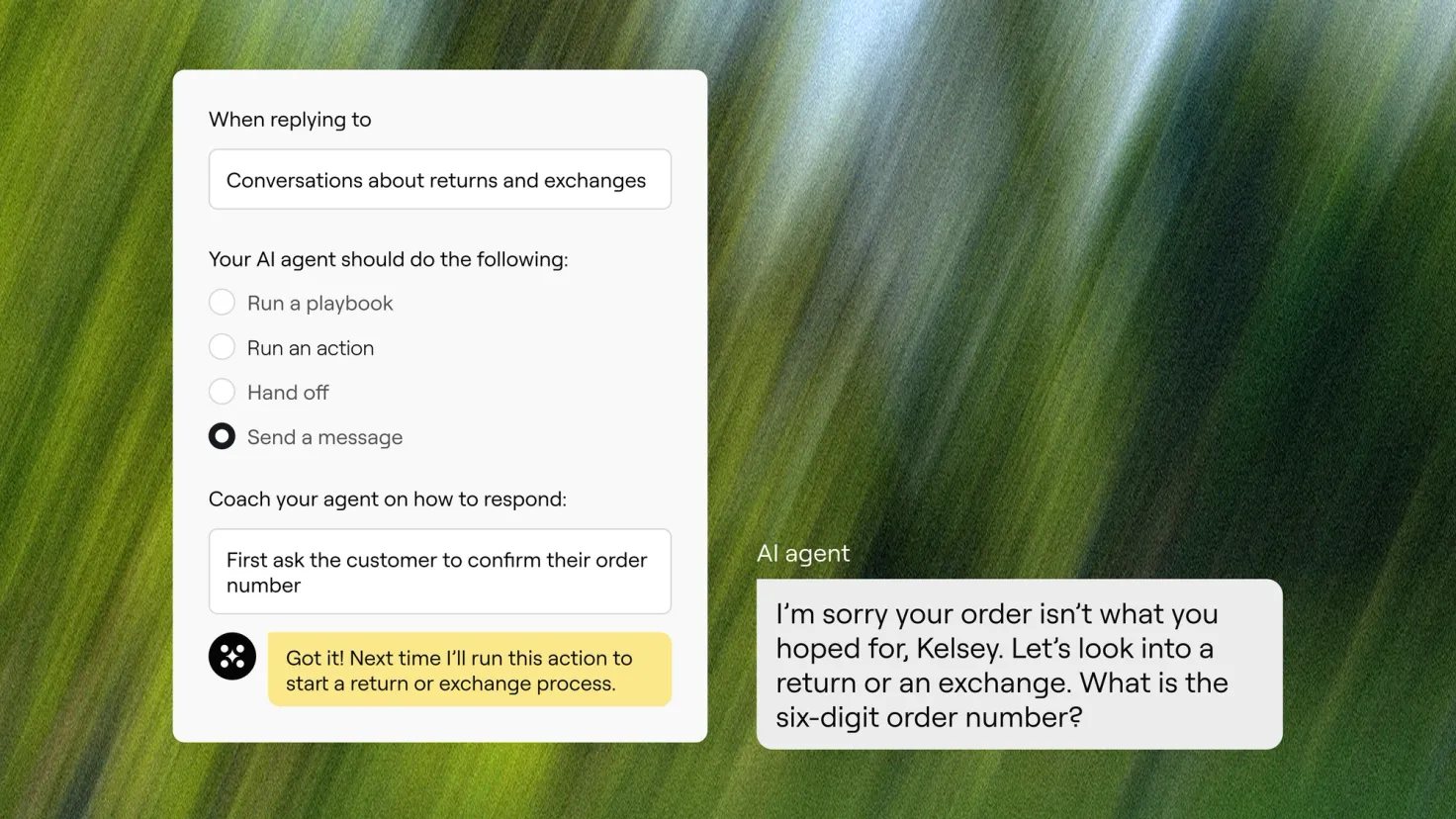
This pattern plays out consistently across enterprise AI deployments. The organizations that are fast becoming Gartner's statistic almost always make the same mistake: they treat AI as a cost-reduction event, not an opportunity for organizational transformation..
The intervention required after the fact often costs more than the foundation they skipped.
The result is operational disruption, degraded customer experience, and a quiet reversal of the headcount reductions that were supposed to fund everything else.
Forrester's 2026 research adds the other half of the story. Their prediction: 30% of enterprises will build parallel AI functions that mirror human service roles, not to duplicate the work, but to own the operational complexity that AI creates.
These are:
These roles are emerging because the enterprises getting real results figured something out early: an AI agent behaves like a customer-facing employee. And you don't hire a new employee, hand them a product manual, and walk away.
You manage them. That means:
The customers hitting the highest resolution rates and CSAT scores aren't just running better AI. They have people whose job is to make the AI better, week over week, on a cadence, and as a core function.
The technology is often the same across organizations. The operating discipline is what separates them. And the enterprises using this operating model are pulling ahead of everyone else.
AI improves customer service efficiency when it's managed within a continuous improvement loop, not treated as a one-time deployment. The most effective organizations do three things differently.
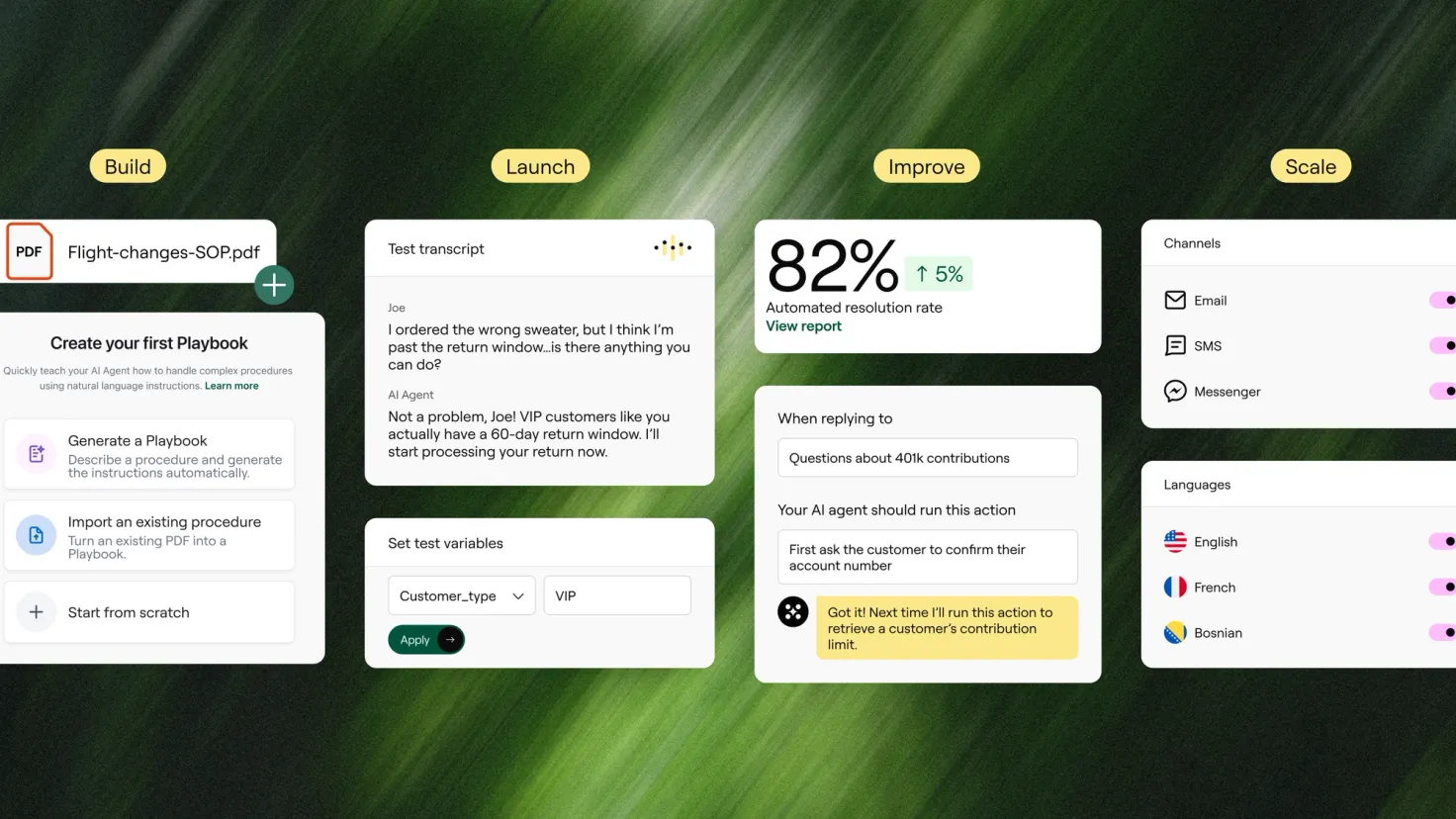
36% of CX leaders say their teams are not adequately resourced and skilled to manage, audit, and coach AI agents. That gap is exactly what Gartner's rehiring prediction is measuring. Closing it is where the real work begins.
There’s a common assumption that consumers are skeptical of AI in customer service. The data says otherwise. Our 2026 report surveyed 2,000 consumers to understand how people actually experience AI in customer service today.
Read report
Ada's ACX Operating Model is built for exactly this challenge. It brings together three interconnected pillars:
What these three pillars create together is the operating muscle that Forrester predicts the winning enterprises will build. And what they consistently produce is results that compound: higher resolution rates, better customer satisfaction, and efficiency gains that don't require giving headcount back.
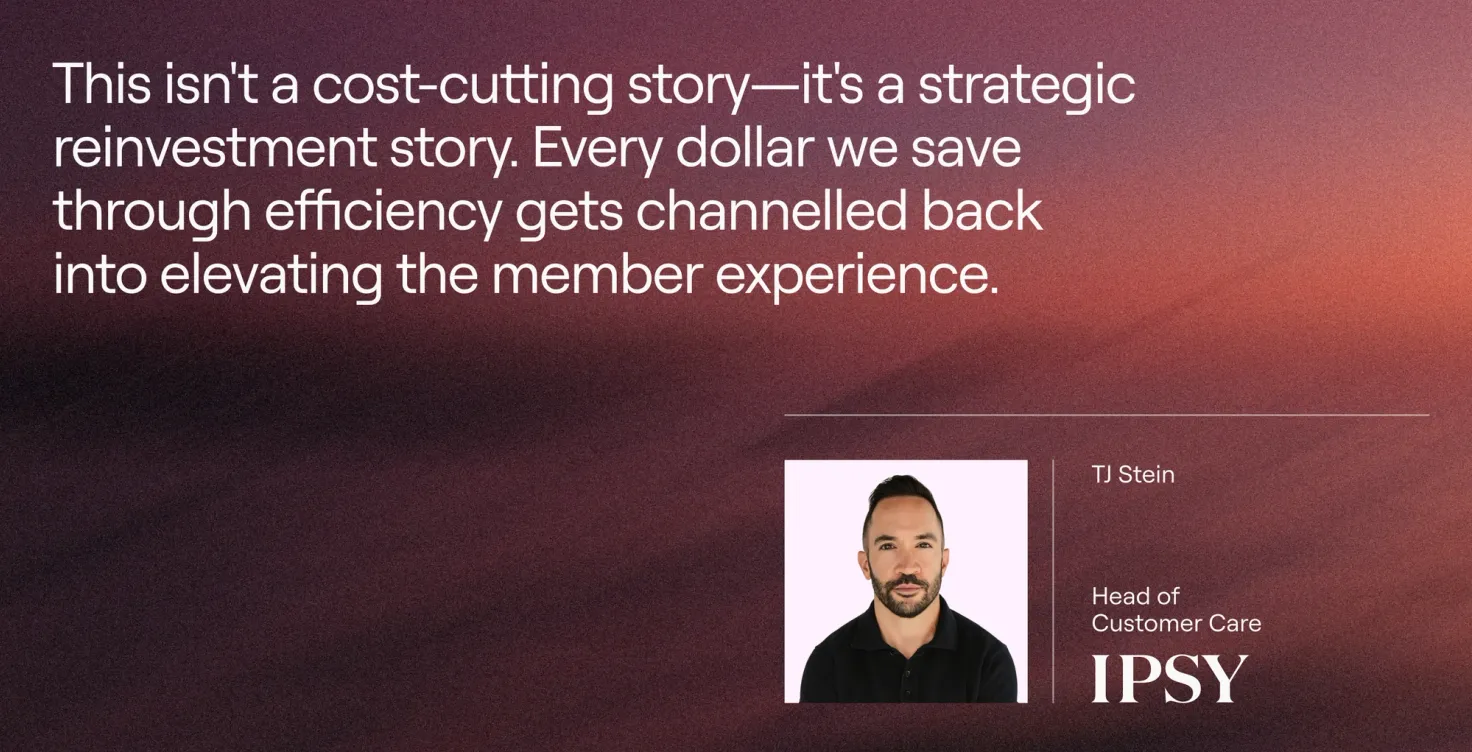
92% of businesses expect to increase AI investment in agentic customer experience over the next 12 months, but the enterprises capturing the most value aren't routing those efficiency gains into headcount reduction. They're routing them into higher-value work, into new competencies and career paths for the people who manage the AI, and into a sustaining AI customer service platform that doesn’t simply reduce costs, it actually grows customer revenue and engagement quarter after quarter.
The CFO conversation isn't going away. Investments in AI for customer service still need to add up, and cost efficiency is a legitimate value driver.
The business case that survives the first 18 months isn't "we'll reduce headcount by X." It's "we'll do more with the team we have, because we've built the operating infrastructure to make AI perform."
That means building the capacity to manage AI agents at scale with the same rigor you'd apply to managing any high-performing team. It means closing the gap that 36% of CX leaders say currently exists in their organizations. And it means measuring AI performance in a way that lets you see what's working so you can accelerate it.
Gartner isn't predicting that AI for customer experience fails. They're predicting that the narrow version of it—deploy, cut, save—will fail. The version that builds a winning operating model alongside the technology has a much better track record.
The enterprises building it now are going to be very hard to catch.
Before choosing the right AI customer service solution, it’s important to understand where your organization is at now. This assessment helps you answer that question with clarity and chart the right course forward.
Take assessment