RFP template: Choosing AI technology for enterprise customer service
An Excel sheet containing 100+ detailed evaluation questions across seven categories in scoring-ready format you can send directly to vendors.
Learn More

The holiday rush is over. The shopping carts are emptied, gifts unwrapped, and inboxes cleared of promo codes. But for ecommerce customer service leaders, the real tension starts now.
Returns season is in full swing, and it’s no longer just an operational spike. It’s a high-volume, high-stakes test of your entire post-purchase strategy.
For customers, it’s a moment of uncertainty. Will the process be fast? Will there be extra fees for the return or for shipping? Will they get a refund or a reason not to come back?
For brands, it’s a moment of truth. This is where CX promises meet the messy reality of broken expectations, ambiguous policies, and overwhelmed support teams. Every return is a test. Not just of systems, but of relationships.
Handled well, returns can be a trust-building interaction. Handled poorly, they can turn a one-time gift into a long-term loss.
In this post, we’ll explore why returns are no longer an edge case , and what makes them such a high-stakes proving ground for modern ecommerce customer experience.
 AI agent in the field: 5 AI customer service use cases ecommerce brands are automating today
 Returns aren’t rare—they’re recurring. And they’re growing.
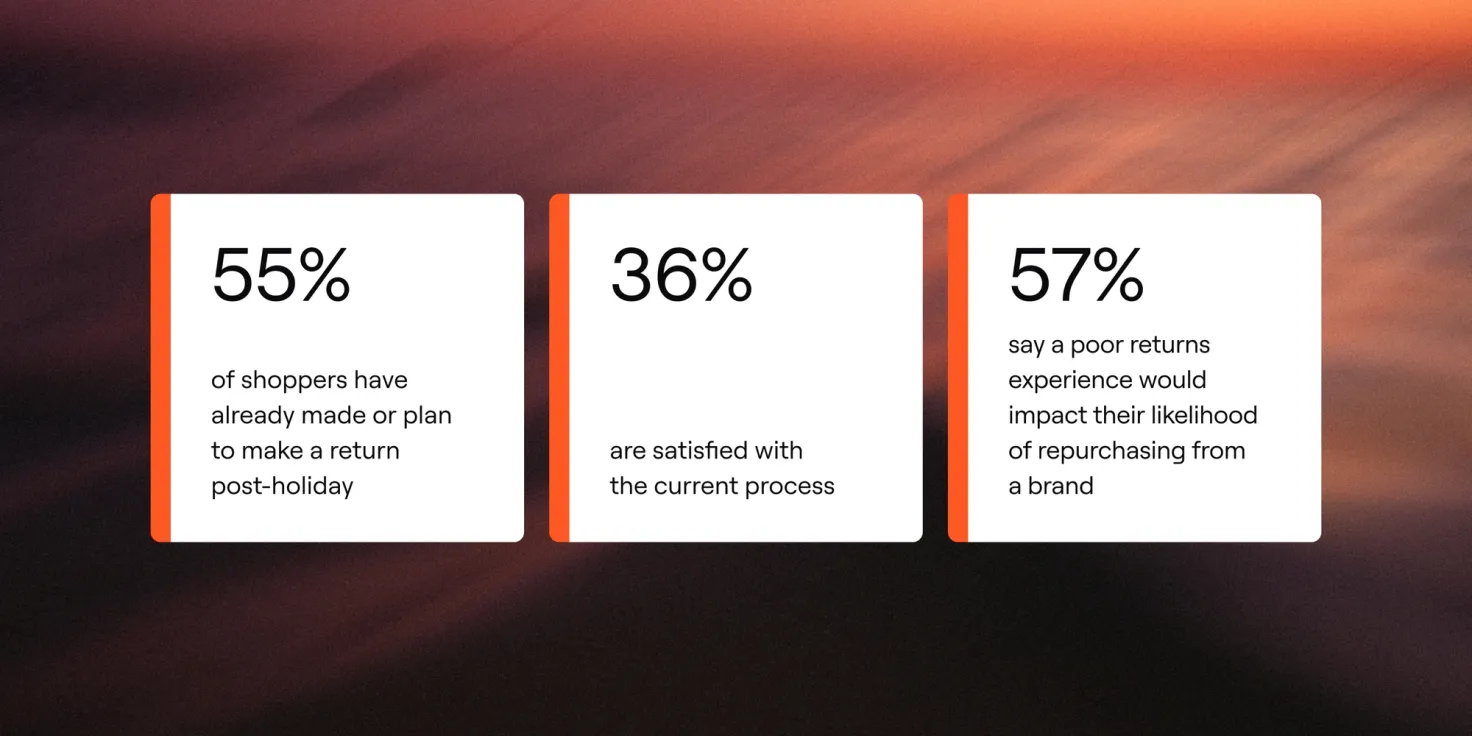
New Ada research found that 55% of shoppers have already made or plan to make a return following the 2025 holiday season, and 21% of consumers say they return items more than once a month. That’s not seasonal. That’s structural.
And structurally? Most returns systems are strained. Returns have become one of the most persistent retail customer service challenges, not because they’re rare, but because they’re emotionally charged, time-sensitive, and operationally complex.
They frequently rely on outdated policies, disconnected support channels, and internal silos that weren’t built for scale. So when volumes spike, like after the holidays, the process breaks. And with it, so does the customer relationship.
Now that customer experience is considered the next competitive battleground , returns are ground zero. They’re the frontline moment when expectations, emotions, and operations collide.
Returns aren’t just transactional. They’re emotional. A return means something didn’t meet expectations: the product, the timing, the experience. And that emotion makes the stakes higher.
Ada’s 2026 consumer survey reveals just how fragile this moment is. Only 36% of shoppers say they’re very satisfied with the returns process, leaving the majority feeling uncertain or underwhelmed.
The most common frustrations customers report include unexpected fees, shipping inconveniences, and unclear return policies.
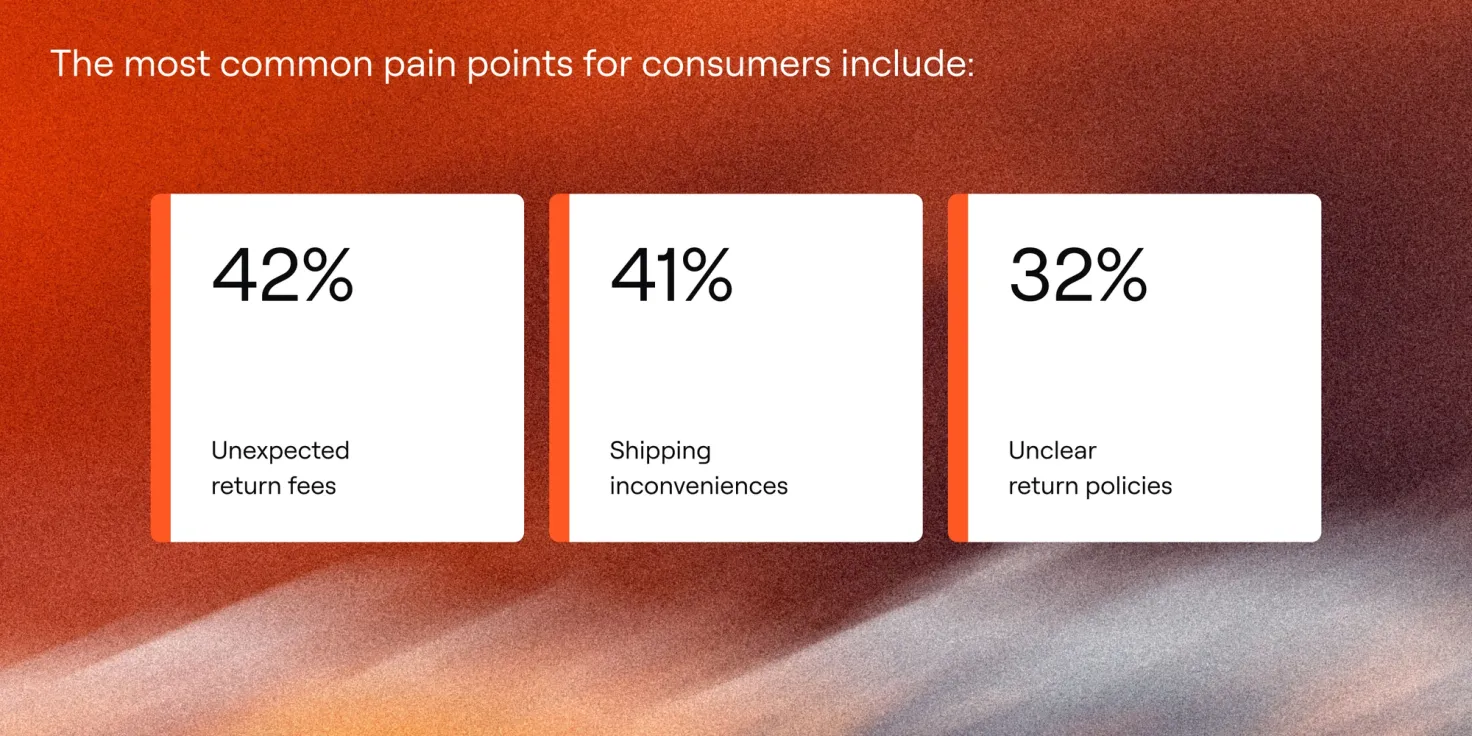
These issues don’t just annoy people. They undermine trust. 57% of consumers say a poor returns experience would impact their likelihood of purchasing from that brand again, regardless of past loyalty.
And while most customers don’t expect perfection, they do expect brands to show up when things go wrong. The return experience is your chance to do exactly that.
It’s tempting to see returns as a support problem. But most customers don’t want to talk to support—they want control. Clarity. Speed.
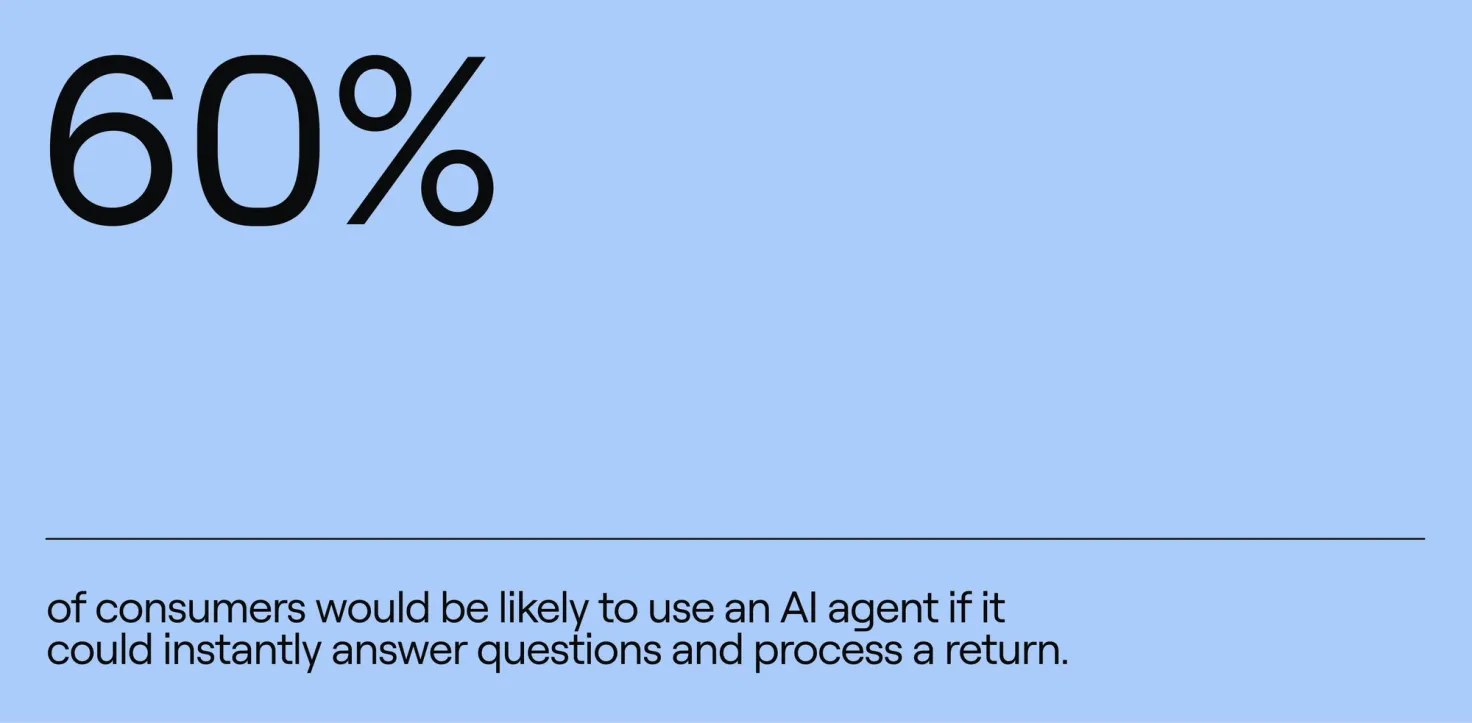
Self-service is now the preferred path for returns, and 60% of consumers say they’d use an AI agent to process a return if it can deliver accuracy and resolution on the first try.
What they don’t want?
Returns that require human escalation should be the exception, not the rule. Your best-case scenario is a return that’s over before the customer even thinks about contacting support.
For years, returns were seen as a back-office function. A sunk cost. A necessary evil.
That’s changed. Forward-thinking brands are starting to treat returns not just as a refund process , but as a meaningful extension of the customer experience—one with the potential to transform loyalty and long-term value.
Smart retailers are realizing that the return journey is the customer journey. It just runs in reverse. And every reverse journey is a test:
Because here's the truth: the ease of your return says more about your brand than the flash of your checkout.
Brands like Rothy’s, Everlane, and Warby Parker use Happy Returns, a service that allows customers to return items in-person—no box, no label, no friction. Customers simply bring the item to a return bar and get their refund processed on the spot.
Why does this work?
Compare that to the typical process: searching for a return link, emailing back and forth, printing a label, paying unexpected fees, and waiting weeks for a refund.
Which version builds loyalty?
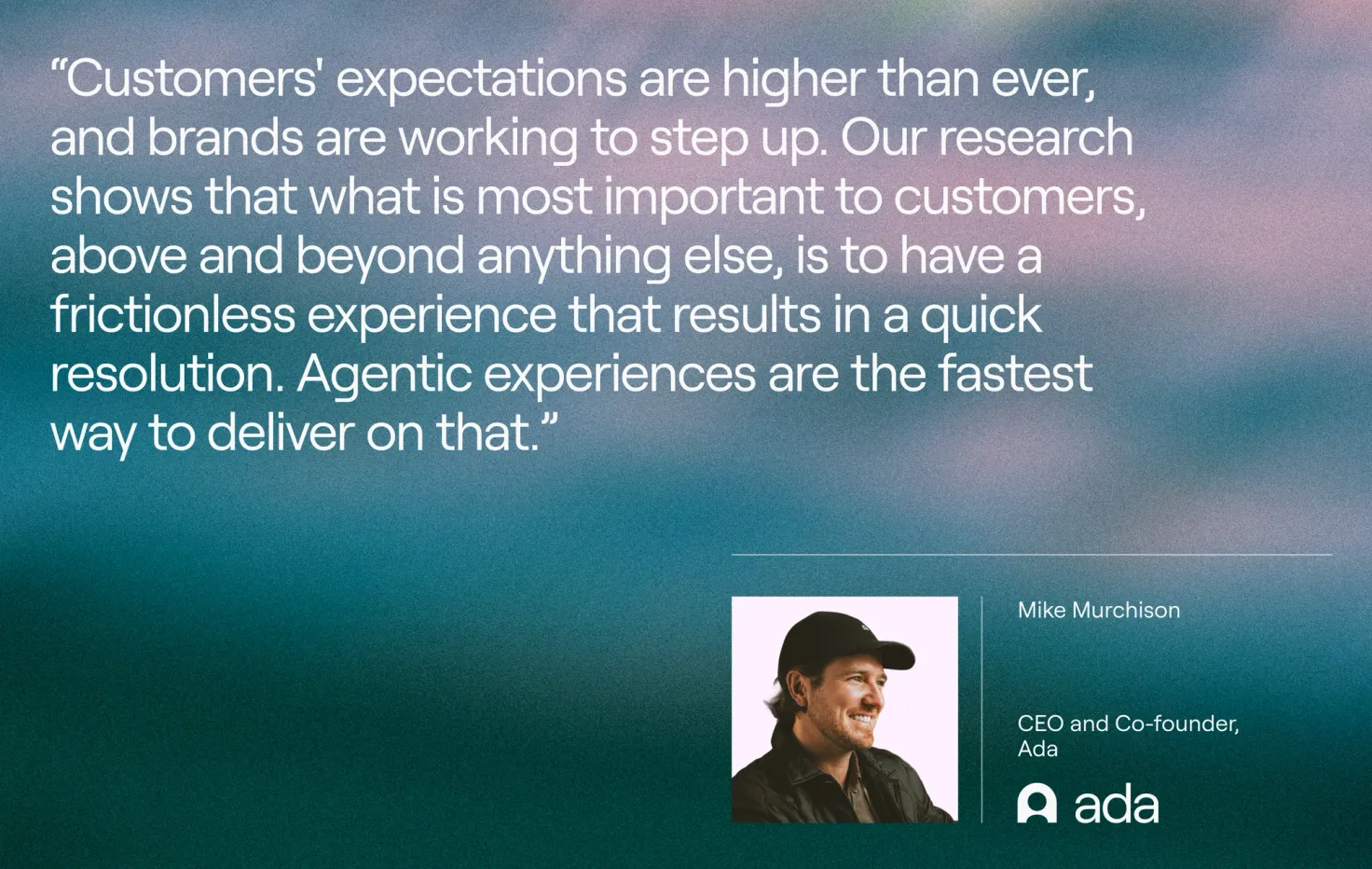
AI doesn’t fix broken processes. But it can scale great ones. The key isn’t automation for its own sake. It’s agentic AI: purpose-built to resolve, not just respond.
At Ada, we’ve found that AI agents are most effective in the returns process when they:
This kind of automation creates more agency for customers, not less. And it creates more leverage for teams who are stretched thin post-holiday.
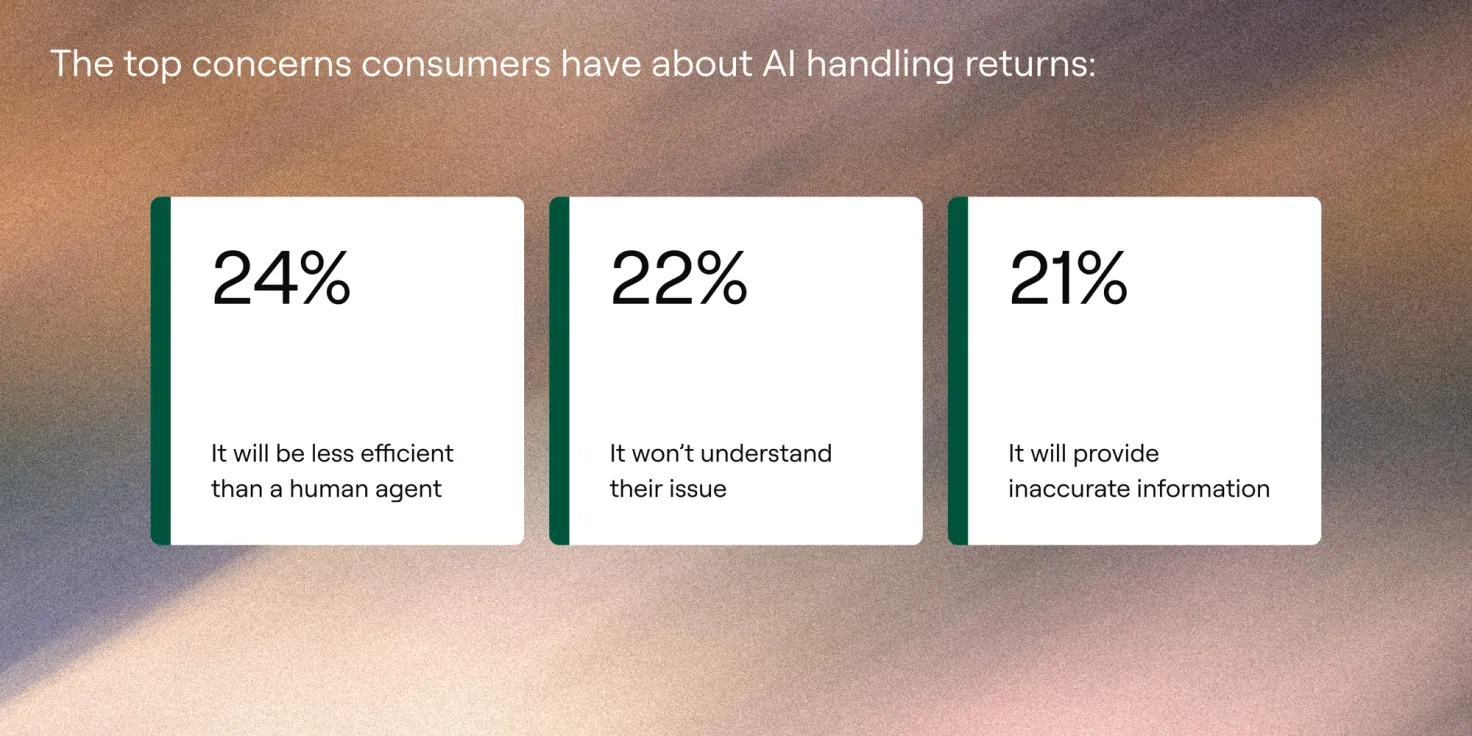
Still, trust in automation isn’t automatic. 24% of consumers worry AI will be less efficient than a human agent, 22% are concerned it won’t understand their issue, and 21% fear it could provide inaccurate information.
These concerns reinforce a crucial truth: AI doesn’t earn trust by being present. It earns it by being useful, accurate, and transparent.
Done well, AI-powered returns don’t feel robotic. They feel respectful.
Returns used to be a blip in the customer journey. Today, they’re a defining moment in brand perception. Handled poorly, returns end relationships. Handled right, they build resilience.
Because in the end, ecommerce customer service is defined not by what happens when everything goes right, but by how you show up when things go wrong.
What happens next is up to you.
Get the latest consumer insights from Ada’s 2026 survey. See what’s breaking the returns experience, and where AI is ready to step in.
Learn more